
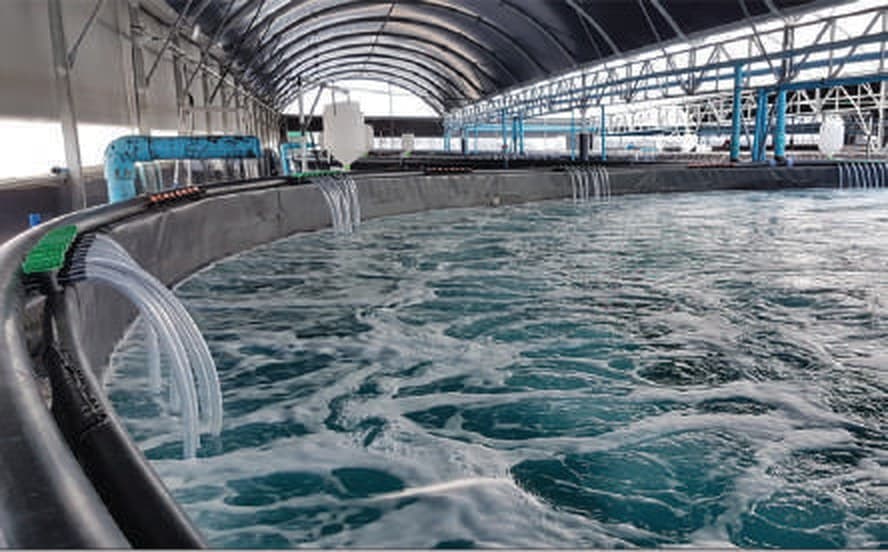
Iron removal · Degasification · Air scour · Ozone feed
منافيخ لمحطات معالجة المياه: التهوية والغسل العكسي
من إزالة الحديد والمنغنيز إلى غسل مرشحات الرمل عكسيًا، معالجة المياه تحتاج هواءً نظيفًا خالياً من الزيت بضغط ثابت. هذا بالضبط ما تفعله منافيخ القناة الجانبية.
Air-scour backwash is a burst duty — high flow for two minutes, then off. Size the blower for the scour rate and the filter cleans without wrecking the media.
Yash Blowers · Engineering desk
FITعائلات ياش المناسبة
Machines built for water treatment plants
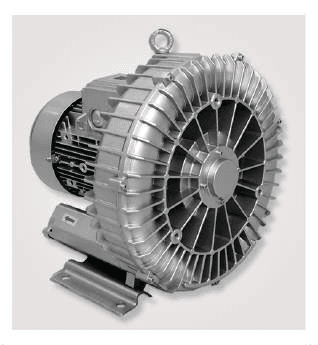
The aeration workhorse for iron and manganese removal — steady oil-free air at the moderate pressure a diffused aeration or contact tank under ~2 m of water needs.
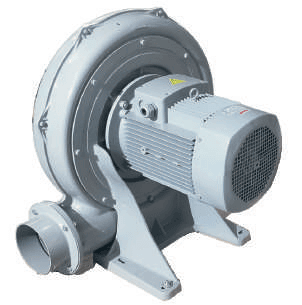
The air-scour machine: high flow at low pressure (under ~100 mbar) for the short backwash burst that fluidises a rapid sand or multimedia bed. Also fits high-flow degasser and CO2-stripping duty.
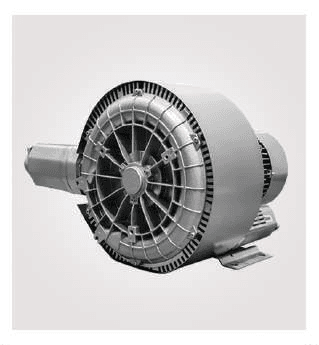
Higher aeration pressure for deep contact tanks and long diffuser headers where a single stage runs out of head.
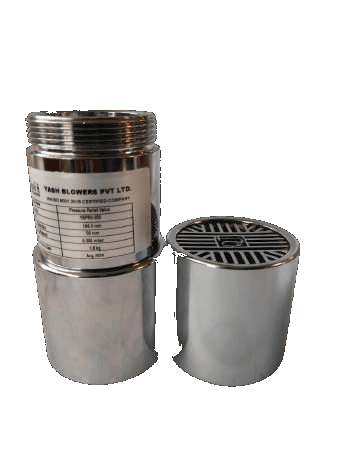
Inlet filtration on every blower so airborne dust and grit never reach the impeller or, through it, the potable water.
APPالجانب الهندسي
The problem: one plant, two air duties that pull in opposite directions
A water treatment plant is not a wastewater plant. Here the raw water is groundwater or surface water being turned into drinking or process water — the load is dissolved iron, manganese, carbon dioxide and dissolved gases, not the organic BOD of sewage. That changes what air is for. Air is used first to oxidise and strip contaminants so a filter can catch them, and second to scour a filter bed clean during backwash. Those two jobs sit at opposite ends of the blower map, and the single most common sizing mistake is buying one machine and asking it to do both.
Aeration for oxidation wants a steady, continuous stream of air at moderate pressure — enough to push through a diffuser under a metre or two of water, running all day. Air-scour backwash wants the opposite: a large volume of air for two to five minutes, at low pressure, delivered in a burst while a filter is offline. Match the wrong curve to either duty and you either starve the process or oversize the motor and burn power for no benefit. Below, each duty is sized on its own terms.
Aeration to oxidise dissolved iron and manganese
Groundwater from tube wells routinely carries dissolved ferrous iron (Fe²⁺) and manganese (Mn²⁺). Both are invisible in the raw water because they are dissolved, but the moment the water reaches a tap and meets air they oxidise, precipitate and stain everything red-brown or black. The job of the treatment plant is to force that reaction to happen inside the plant, not in the customer's pipework.
The chemistry is an oxygen-transfer problem. Aeration dissolves oxygen into the raw water, which converts soluble ferrous iron to insoluble ferric hydroxide and manganese to manganese dioxide — solids a filter can then remove. Iron oxidises fairly readily; manganese is slower and needs a higher pH and more contact time, which is why plants aerate generously and hold the water in a contact or aeration tank before filtration. The practical target is simple: get enough dissolved oxygen into the water, with enough contact time, that the iron and manganese are fully oxidised before they hit the filter. A blower feeding fine-bubble or coarse-bubble diffusers in an aeration tank, or an air header under a cascade or spray aerator, is the standard way to do it.
For this duty the pressure is set by how deep the diffusers sit — roughly 100 mbar per metreof water column, plus diffuser and pipe losses. A 3 m aeration tank therefore wants a blower holding comfortably above 300 mbar. A single-stage turbine (regenerative) blower covers most iron-removal aeration tanks; where the tank is deep or the header is long, a double-stage machine holds the head a single stage runs out of. The airflow is set by the oxygen the water demands and the volume being treated — a design point, not a guess, so it pays to size on the plant's actual flow in m³/hr and the raw-water iron and manganese figures.
Degasification and CO2 stripping
Many groundwaters are aggressive — high in dissolved carbon dioxide, which makes the water acidic and corrosive to concrete and metal pipework, and sometimes carrying hydrogen sulphide that smells of rotten eggs. Aeration does double duty here: the same air that dissolves oxygen also strips out dissolved gases. Blowing air up through the water, or cascading water through a counter-current air stream in a degasser or forced-draught aerator, drives dissolved CO₂ out of solution. That raises the pH, reduces corrosivity and improves the efficiency of downstream iron and manganese removal, because both oxidise faster at a higher pH.
A degasification tower or forced-draught aerator is usually a high-flow, low-pressure duty — the blower only has to move a large volume of air against the packing and a short water column, not push through deep diffusers. This is where a centrifugal blower earns its place: it delivers the air volume a degasser needs at the modest pressure the tower resistance demands, without the oversized pressure rating of a diffused-aeration machine.
The solution: air-scour backwash of rapid sand and multimedia filters
After oxidation and settling, the water passes through rapid sand or multimedia filters that trap the iron floc, manganese dioxide and any suspended solids. Those filters clog, and washing them with water alone is inefficient — the grains stay coated and the bed does not properly expand. The standard modern practice is air-scour backwash: a short burst of air is blown up through the underdrain and nozzle plate to fluidise and agitate the bed, so the grains rub against each other and shed their coating. Air is applied first (or combined with a low water rate), then water follows to carry the dislodged solids to waste.
This is a high-flow, low-pressure duty and the reason a centrifugal blower fits so well. The air only has to overcome the water column above the nozzle plate plus the underdrain and media resistance — typically under 100 mbar for a filter with a metre or so of water over the bed. What the duty demands is volume: a lot of air, delivered for two to five minutes, at that low head. A centrifugal blower produces exactly that shape of curve — high flow at low pressure — where a positive-displacement or high-pressure ring blower would be badly oversized on pressure and undersized on economical flow. The Yash CX-series centrifugal blowers are built for this air-scour duty.
Air scour is sized by the surface area of the filter bed, not by the plant flow. The design figure is an air rate per unit of bed area — commonly in the region of 50–60 Nm³/hr per m² of filter area for a sand bed, adjusted for the media and the underdrain design. So the method is: take the plan area of the filter cell in m², multiply by the scour rate in Nm³/hr per m², add a margin for underdrain and pipe losses, and that total airflow at the filter's low back pressure is the blower duty. A 10 m² filter cell at 55 Nm³/hr per m², for example, calls for roughly 550 Nm³/hr at under 100 mbar — squarely a centrifugal-blower selection. Where several cells backwash in rotation, you size the blower for one cell's scour and sequence the wash, not for all cells at once.
Why aeration and air scour want different blower types
Put the two duties side by side and the reason they need different machines is obvious. Aeration is continuous, moderate-to-high pressure, moderate flow — the air fights a deep water column all day, so you want a turbine (regenerative) blower that holds pressure efficiently at part flow. Air scour is intermittent, very low pressure, very high flow — the air barely has a metre of water to beat but has to move in huge volume for a few minutes, so you want a centrifugal blower whose curve delivers that flow cheaply at low head.
Ask a single high-pressure blower to do the air-scour job and you pay for pressure you never use and get throttled flow. Ask a centrifugal blower to feed deep aeration diffusers and it simply cannot make the head. That is why a properly designed water plant carries both: a turbine blower on the aeration and degasification header, and a centrifugal blower on the air-scour manifold. Selecting each to its own curve is the difference between a plant that runs at its design power and one that quietly wastes energy at every wash.
Ozone-feed air and why oil-free is non-negotiable
Plants that disinfect or oxidise with ozone need a clean, dry air supply to feed the ozone generator (or the oxygen concentrator ahead of it). The blower or compressor that supplies that feed air must deliver oil-free air at a steady pressure — any oil carried forward fouls the generator dielectrics and the downstream contactors.
Across every one of these duties, the same rule holds: this is potable and process water, and nothing in the air path may contaminate it. Regenerative turbine and centrifugal blowers move air with a single die-cast impeller and no oil in the air stream — there is no lubricant on the process side to carry into the water, unlike an oil-lubricated positive-displacement machine. That is exactly why they are the right family for drinking-water plants. Fit an inlet filter on every machine so airborne dust and grit never reach the impeller or, through it, the treated water — a small assembly that protects both the blower and the water quality.
Selecting for a water plant
The design sequence is the same each time. Fix the aeration diffuser depth to set the aeration pressure, and total the process air the raw-water iron, manganese and CO₂ load demands to set the aeration flow — that picks the turbine blower. Separately, take the filter cell area and the scour rate in Nm³/hr per m² to set the air-scour flow at its low back pressure — that picks the centrifugal blower. Size the degasser, if any, as its own high-flow low-pressure duty. Send us the plant flow, the raw-water analysis and the filter dimensions, and we confirm the specific Yash models for each header rather than forcing one machine to compromise across all of them.
SIZEإرشادات تحديد المقاس
| Duty | Set the flow by | Approx. pressure | Blower type / example Yash models |
|---|---|---|---|
| Iron / manganese aeration (2 m tank) | Process O2 demand & plant m³/hr | ≥ 250 mbar | Single-stage turbine · YEBL-1-210 · YEBL-1-345 |
| Iron / manganese aeration (3 m+ tank) | Process O2 demand & plant m³/hr | ≥ 350 mbar | Single / double stage · YEBL-1-530 · YEBL-DS-150 |
| Degasification / CO2 stripping | Air-to-water ratio at the tower | 40 – 80 mbar | Centrifugal · YBCB-CX-125A · YBCB-CX-150A |
| Air-scour backwash (small cell ~6 m²) | ~55 Nm³/hr per m² of bed area | < 100 mbar | Centrifugal · YBCB-CX-125A |
| Air-scour backwash (large cell ~12 m²) | ~55 Nm³/hr per m² of bed area | < 100 mbar | Centrifugal · YBCB-CX-150A · YBCB-TBM-150-10 |
| Ozone-feed air supply | Generator feed-air spec | per generator | Oil-free turbine · YEBL-1-210 |
Indicative only — final selection depends on your exact duty point, altitude and air temperature. Send the numbers and an engineer confirms the model.
FAQFrequently asked questions
Why can't one blower handle both aeration and air-scour backwash?
Because the two duties sit at opposite ends of the curve. Aeration for iron and manganese removal is continuous air at moderate-to-high pressure (roughly 100 mbar per metre of diffuser depth) at moderate flow — a turbine blower. Air-scour backwash is a two-to-five-minute burst of very high flow at very low pressure (usually under 100 mbar) — a centrifugal blower. A single machine sized for aeration pressure is badly oversized and inefficient on scour flow, and a centrifugal cannot make aeration head. A properly designed plant carries one of each.
How do I size an air-scour blower for a rapid sand filter?
Size it by the filter bed area, not the plant flow. Take the plan area of the filter cell in m², multiply by the scour air rate — commonly around 50–60 Nm³/hr per m² for a sand bed — and add a margin for underdrain and pipe losses. A 10 m² cell at 55 Nm³/hr per m² needs about 550 Nm³/hr at under 100 mbar, which is a centrifugal-blower duty. Where cells backwash in rotation, size for one cell and sequence the wash.
Are Yash water-treatment blowers oil-free and safe for drinking water?
Yes. Both the turbine (regenerative) and CX-series centrifugal blowers move air with a single die-cast impeller and no oil in the air path, so there is no lubricant on the process side to carry into the treated water — essential for potable and process water and for ozone-feed air. Fit the inlet filter assembly so airborne dust never reaches the impeller or the water.
Do you supply blowers for iron-removal and degasification plants for export?
Yes. We supply both the aeration turbine blowers and the centrifugal air-scour blowers for drinking-water and process-water plants, packed in seaworthy crates with test certificates on request. Send the plant flow in m³/hr, the raw-water iron, manganese and CO₂ figures and the filter cell dimensions, and we confirm the models for each header.
RFQ / Request for Quotation
بحاجة إلى تحديد منفاخ لتطبيق محطات معالجة المياه؟
Send duty point, flow and pressure — an engineer sizes the right model and quotes ex-works Faridabad, FOB Nhava Sheva or CIF your port.