
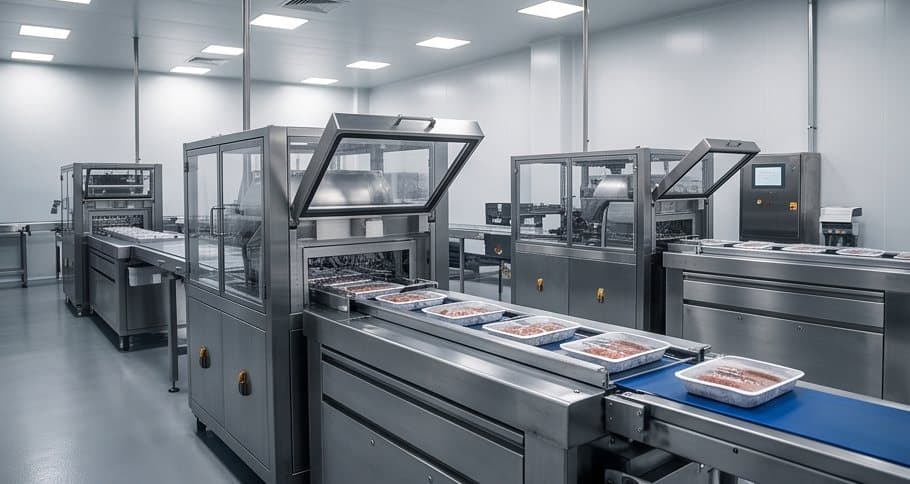
 Illustrative
Vacuum packaging · Bottling · Powder conveying · Air knives
تفريغ ومنافيخ لتصنيع الأغذية: خالية من الزيت بالضرورة
في خطوط الأغذية، الهواء الملامس للمنتج لا يمكن أن يحمل زيتًا. مضخات التفريغ الجافة لدينا تعمل بدون زيت من حيث المبدأ، لا بالفلترة — وهذا فرق جوهري في التدقيق الصحي.
Food air is regulated air. Oil-free blowers and dry vacuum pumps keep the process clean from the packaging line to the CIP skid — no lubricant anywhere near the product.
Yash Blowers · Engineering desk
FITعائلات ياش المناسبة
Machines built for food processing
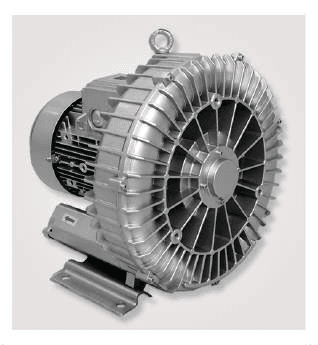
Oil-free air for hold-down, pick-and-place, air-knife drying of bottles and cans, aeration in fermentation and dilute-phase powder conveying — a single impeller, no oil in the air path, continuous duty.
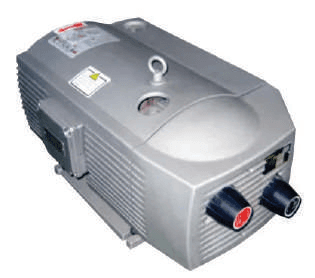
Dry (oil-free) vacuum for vacuum packaging, form-fill-seal and vacuum conveying receivers — no oil mist in the exhaust and no oil to back-migrate toward the product, so the package interior and food stay clean.
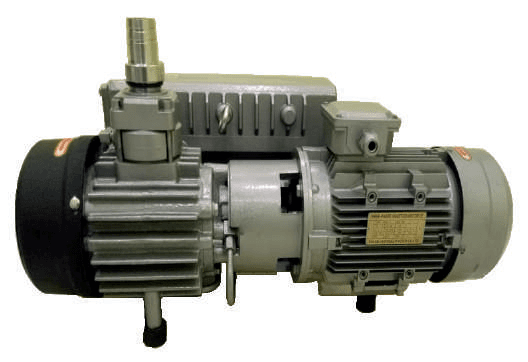
When packaging or de-aeration needs a deeper vacuum than a rough dry pump holds, the high-vacuum series pulls the extra head while staying oil-free for hygienic duty.
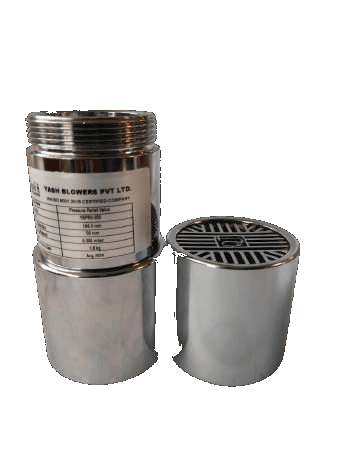
Inlet filtration to keep flour dust, sugar, powder and airborne debris out of the impeller or pumping chamber — essential in a dusty ingredient or packaging area.
APPالجانب الهندسي
The problem: in a food plant, the machine itself must not contaminate the product
Every other application worries about pressure, flow and power. Food and beverage processing adds a constraint that overrides all of them: whatever air or vacuum touches the product, the package or a food-contact surface must be clean and oil-free. An oil-lubricated vacuum pump or a lubricated compressor carries a fine oil mist in its discharge — and on the vacuum side, oil vapour and back-migration from the pump can reach the product chamber. On a filling, bottling or packaging line that mist ends up on can rims, bottle necks, film, sealing jaws and the food itself. It taints flavour, it fails swab tests, and in an audited plant it is a finding that stops a shift.
So the engineering question in food is not only “which machine moves the air” but “which machine moves the air without ever becoming the contamination source.” That is why regenerative (ring) blowers and dry — that is, oil-free — vacuum pumps are the default choice across food and beverage duties, and why swapping an oil-lubricated rotary-vane pump for a dry vacuum pump is one of the most common hygiene upgrades a plant makes. The rest of this page walks the real duties on a line, and where each Yash machine fits.
Duty 1: vacuum packaging and form-fill-seal
Vacuum packaging and thermoforming form-fill-seal (FFS) lines evacuate air from a pocket or chamber before sealing, so the product sits in a low oxygen environment that slows spoilage and extends shelf life. The evacuation has to be deep and fast: a chamber machine or an FFS station pulls each pocket down to a rough vacuum in the seconds the cycle allows, then seals. The pump that does this runs thousands of cycles a shift, and its exhaust and any back-streamed vapour are in the hygienic zone of the line.
This is the textbook case for a dry (oil-free) vacuum pump. With no oil in the pumping chamber there is no oil mist in the exhaust and no oil to back-migrate toward the product pocket, so the package interior and the food stay clean. Dry pumps also drop the maintenance that oil-lubricated machines demand — no oil changes, no oil-mist separators to service, no oil disposal — which matters on a line that must stay clean and cannot tolerate an oil leak near open product. Size the pump to the number of packaging stations and the target cycle time: total the volume each pocket or chamber evacuates, divide by the seconds available to reach sealing vacuum, add margin for line and manifold losses, and pick the pump whose pumping speed at working vacuum covers it.
Duty 2: vacuum hold-down and pick-and-place on filling & bottling lines
Filling, bottling, capping and labeling lines lean on vacuum for handling. Suction cups lift and place bottles, cans, cartons, lids and labels; vacuum grippers on a pick-and-place head move fragile or awkward containers; and vacuum hold-down keeps thin or light packs registered on a conveyor while a label wraps or a filler dispenses. None of this needs deep vacuum — it needs a steady, reliable flow of low vacuum that recovers instantly each time a cup grips or releases.
A regenerative blower run in vacuum modeis ideal here: oil-free, a single impeller with nothing to wear, and continuous duty with a fast response the moment a gripper cycles. Because the air is oil-free, the same machine can feed hold-down and pick-and-place right in the hygienic zone without risking the product or the primary package. For deeper or more demanding handling — larger cups, higher hold-down force, longer manifolds — a dedicated dry vacuum pump gives the extra head that a single-stage blower runs out of. Both keep oil out of the line.
Duty 3: pneumatic conveying of powders and ingredients
Food plants move a lot of dry solids — flour, sugar, milk powder, starch, cocoa, salt, spice blends, additives — from silos and intake to mixers, hoppers, dosing stations and packaging. Pneumatic conveying does this in closed pipework, which keeps the powder enclosed, clean and free of manual handling. Dilute-phase conveying and vacuum transfer both run on a pressure or vacuum source, and once again that air is in direct contact with a food ingredient.
On the pressure side a regenerative blower supplies the oil-free air that carries powder through the line without adding a contaminant. On the vacuum side a dry vacuum pump draws ingredient into a receiver at a weigh or mix station — oil-free, so nothing migrates into the product. The reason to insist on oil-free here is the same as everywhere else in the plant: a lubricated machine would put an oil film on the very powder you are conveying. Size the conveying source to the material, the conveying rate in kg/hr, the line length and the pipe diameter; light powders such as flour and milk powder convey at modest pressure but need generous airflow to stay entrained, so flow usually sets the machine, not pressure.
Duty 4: aeration, agitation and air knives
Blower air does more than convey. In fermentation, brewing and some beverage processes a blower supplies low-pressure aeration and agitation — sparging air into a tank to feed an aerobic culture or to keep a liquid mixed and moving. Oil-free air is mandatory: this air bubbles directly through product. A regenerative blower delivers the continuous, clean, low-pressure flow these tanks need.
At the dry end of the line, air knivesdriven by a regenerative blower strip water off washed bottles, cans, jars and lids before filling, coding or labeling — a wet surface rejects a label and smears an ink-jet date code. The same high-velocity air sheet blows dust, caps and debris off containers on the way in. Because the blower is oil-free, the air that hits a rinsed, food-contact bottle just before it is filled stays clean. One blower, sized for the air-knife gap length and the standoff, can feed a bank of knives across a conveyor.
The solution: oil-free by design, sized to the line
The thread running through every duty above is hygiene. A regenerative blower is a single die-cast aluminium impeller spinning in a side channel — no vanes, no pistons, and crucially no oil in the air path. A dry vacuum pump achieves rough and medium vacuum with no oil in the pumping chamber. Choosing these over oil-lubricated machines is not a preference in food; it is what keeps the machine from ever being the reason a batch fails a check. Pair either with the right inlet filtration to keep dust and airborne debris out of the machine, and, where the plant specifies it, food-contact and hygienic-design considerations on the pipework, seals and mounting so the installation cleans down properly.
Sizing follows the duty. For vacuum packaging and FFS, size by the number of packaging stations and the cycle time— pumping speed at working vacuum must evacuate every pocket inside the seconds the cycle allows, with margin. For hold-down and pick-and-place, size by the number and diameter of cups and the vacuum level the grip needs. For conveying, size by material and conveying rate. For air knives and aeration, size by air-knife length or tank volume. Fix the governing number, add a sensible margin, and pick the smallest Yash machine that covers it. Use the table below as a starting point, then send us the real line data and we confirm the model.
Redundancy and clean-down: keep the line running and auditable
A packaging or filling line that stops is lost production and, for chilled or fresh product, lost stock. Where a single vacuum source feeds several packaging stations, build in redundancy — an N+1 arrangement on a shared manifold with a non-return valve per machine, or a standby pump that starts on a vacuum-level alarm — so one failure does not idle the whole line. Because dry pumps and regenerative blowers carry no oil, a swap is cleaner and faster and there is no oil to drain or dispose of during a changeover or a wash-down. Yash keeps spares in-house and air-freights them to export customers, so a down machine on a food line is a same-week fix rather than a spoiled production run.
SIZEإرشادات تحديد المقاس
| Duty on the line | What sets the size | Machine type | Example Yash models |
|---|---|---|---|
| Vacuum packaging / FFS | Stations × cycle time | Dry (oil-free) vacuum pump | YBDVP 40 · YBDVP 100 |
| Deep-vacuum packaging / de-aeration | Target vacuum level | High-vacuum pump | ACME-040 · ACME-100 |
| Hold-down & pick-and-place | Cup count & diameter | Regenerative blower (vacuum) | YEBL-1-145 · YEBL-1-265 |
| Powder / ingredient conveying | Rate in kg/hr, line length | Regenerative blower (pressure) | YEBL-1-265 · YEBL-1-400 |
| Air-knife bottle/can drying | Air-knife length & standoff | Regenerative blower (pressure) | YEBL-1-265 · YEBL-1-400 |
| Aeration / agitation in tanks | Tank volume & depth | Regenerative blower (pressure) | YEBL-1-145 · YEBL-1-400 |
Indicative only — final selection depends on your exact duty point, altitude and air temperature. Send the numbers and an engineer confirms the model.
FAQFrequently asked questions
Why use an oil-free (dry) vacuum pump instead of an oil-lubricated one on a food line?
Because the pump's exhaust and any back-streamed vapour are in the hygienic zone. An oil-lubricated pump carries an oil mist and can back-migrate oil toward the product pocket, so it can taint the food, the package interior and food-contact surfaces and fail swab or audit checks. A dry vacuum pump has no oil in the pumping chamber, so there is no oil mist and nothing to migrate into the product — and it removes oil changes, mist separators and oil disposal from the maintenance schedule.
How do I size a vacuum pump for a packaging line?
Size by the number of packaging stations and the cycle time. Total the volume each pocket or chamber has to evacuate, divide by the seconds available to reach sealing vacuum, add margin for manifold and line losses, and choose the pump whose pumping speed at working vacuum covers that demand. Send us the station count, pocket volume and cycle time and we confirm the model.
Can one blower handle both air-knife drying and powder conveying?
They are different duties, so usually not the same machine at once. Air-knife drying needs a high-velocity air sheet set by knife length and standoff; dilute-phase powder conveying needs generous oil-free airflow to keep light powders like flour and milk powder entrained. Both run on oil-free regenerative blowers, but each is sized to its own duty — tell us both loads and we can propose whether one machine or two fits your line.
Are Yash food-processing blowers and pumps oil-free and suitable for hygienic duty?
Yes. The regenerative blowers use a single die-cast impeller with no oil in the air path, and the dry vacuum pumps run with no oil in the pumping chamber, so the air and vacuum delivered to the product, package and food-contact surfaces stay clean. Paired with the right inlet filtration and hygienic-design pipework and seals, they suit food and beverage processing and packaging duties. We export blowers, dry vacuum pumps and spares worldwide with test certificates on request.
RFQ / Request for Quotation
بحاجة إلى تحديد منفاخ لتطبيق تصنيع الأغذية؟
Send duty point, flow and pressure — an engineer sizes the right model and quotes ex-works Faridabad, FOB Nhava Sheva or CIF your port.