
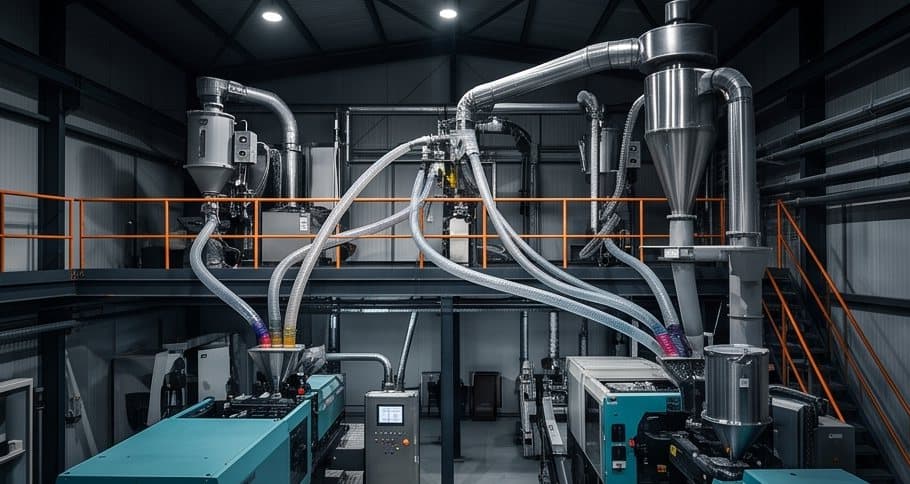
 Illustrative
Powders · Granules · Pellets · Food · Chemicals
مضخات ومنافيخ للنقل بالتفريغ: مساحيق وحبيبات
نقل المساحيق والحبيبات والكريات عبر خطوط أنابيب يحتاج التفريغ الصحيح عند نقطة الالتقاط، لا مجرد آلة كبيرة. نحدد المقاس من طول الخط والحمولة.
Dilute-phase conveying is a balance of vacuum and airflow. Get the duty point right and powder moves across the plant without settling, packing or dropping out of the line.
Yash Blowers · Engineering desk
FITعائلات ياش المناسبة
Machines built for vacuum conveying
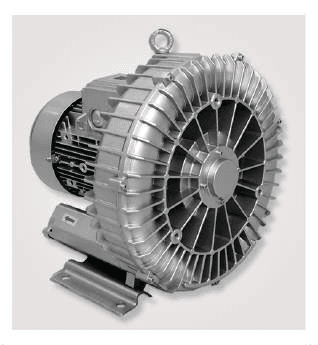
The default vacuum source for short-to-medium, light-to-medium duty — granule loaders, extruder feeding, machine-side conveying in the 150–350 mbar range. Oil-free, single impeller, only the inlet filter to service.
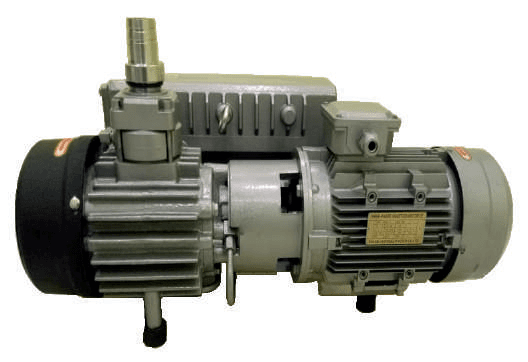
For long lines, tall lifts and higher conveying rates where a ring blower runs out of head — holds deep vacuum past 500 mbar so material stays entrained the full distance to the receiver.
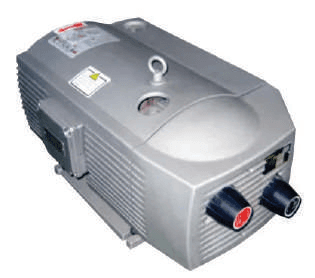
Oil-free dry pump for food, pharma and fine-chemical transfer and continuous heavy duty — deep vacuum with no oil in the process stream, nothing to contaminate the product, no oil changes.
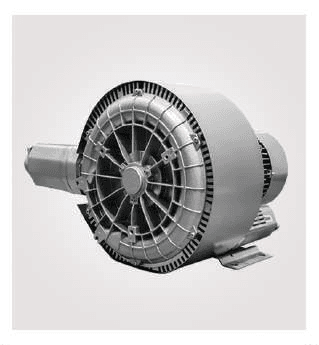
When a single-stage ring blower is short on vacuum for a medium line but a full vacuum pump is more than the duty needs — the two-stage impeller adds head while staying oil-free.
APPالجانب الهندسي
The problem: moving bulk solids without dust, spillage or a forest of mechanical conveyors
Every process plant that handles powders, granules, pellets or tablets faces the same task — get the material from where it arrives to where it is used, cleanly and without a person carrying sacks. Mechanical answers exist, screw conveyors, bucket elevators, belts, drag chains, but they leak dust at every transfer, they are open to contamination, they are fixed to one route, and they are awkward when you have to pull from several sources into one destination — five drums, three bins and a bulk bag all feeding one reactor or one packing line. Mechanical conveyors also struggle with hygiene: in food, pharma and fine chemicals you cannot have open augers shedding metal wear and product dust across a clean room.
Vacuum conveying solves this with air and a pipe. Because the whole conveying line runs below atmospheric pressure, it is inherently dust-tight, any leak sucks air in rather than blowing product out, so it is the natural choice for dusty, toxic, hygroscopic or hygienic materials. Plastic granules to an extruder, milk powder or flour to a mixer, pigment and additive powders to a batch vessel, tablets and capsules between process steps, all move well on vacuum. And one vacuum source can serve many pickup points through a simple manifold, which is why multi-source-to-one-destination layouts are where vacuum earns its keep.
How a vacuum conveying system actually works
The layout is deliberately simple. At one end sits a pickup point — a suction lance in a drum, a wand in a bag, a hopper adaptor under a bulk bag. From there a smooth-bore conveying line runs to a receiver (a filter separator) mounted over the destination vessel. On top of the receiver is a filter — cartridges or a bag, and above that the vacuum source, the blower or pump, pulls the air. When the pump runs, air rushes into the pickup point, entrains the powder or granules and carries them as a dilute cloud down the line. At the receiver the air turns, slows and exits up through the filter while the solids, now too heavy to follow the air around the bend, drop into the bottom of the receiver.
Most vacuum systems run in batches on a sequence. The pump pulls for a set time and fills the receiver; then the vacuum is broken, the filter is pulse-cleaned with a short reverse blast, and a discharge valve (a butterfly or a flap) at the bottom of the receiver opens to drop the batch into the vessel below. The valve then closes and the next suction cycle begins. This receive-and-dump rhythm is what lets a modest pump move a large hourly tonnage: it is conveying hard for part of the cycle and discharging for the rest. Dilute phase means the solids are fully suspended in a fast-moving, air-rich stream — a low material-to-air ratio — so the material behaves almost like a gas and follows the pipe around bends without settling.
The two numbers that decide everything: vacuum level and pickup velocity
Sizing a vacuum system is a balance between two quantities, and getting the balance right is the whole engineering job. The first is air velocity. To keep material entrained in dilute phase, the air in the pipe must move fast enough to lift and carry every particle — this minimum is the pickup (or saltation) velocity. Light powders may only need 12–18 m/s; heavier granules and pellets want 20–30 m/s or more. Run below pickup velocity and the material drops out of suspension, settles along the bottom of the pipe and eventually blocks the line. Run far above it and you needlessly grind the product, wear the bends and waste power. So you fix a target conveying velocity, and that, with the pipe bore, sets the air flow in m³/hr the pump must move.
The second number is vacuum level, measured in mbar below atmosphere. Vacuum is what overcomes the resistance of the whole line — the friction of the air, the energy to accelerate and lift the solids, and the losses through every bend and the filter. The more you convey (higher kg/hr) and the further you convey it (longer equivalent line length, more bends and vertical lifts), the deeper the vacuum you need. A short, light transfer might run on 150–250 mbar of vacuum; a long line moving a heavy granule at a high rate can need 500 mbar or more. The design procedure is: pick the pickup velocity for the material (sets air flow), estimate the vacuum from the conveying rate and the equivalent line length, add margin for the filter and a dirty-filter allowance, and choose the smallest machine that delivers both the flow and the vacuum together. Neither number alone selects the pump — you must satisfy both at once.
The solution: match the vacuum source to the duty
Three classes of machine cover the vacuum side, and picking the right one is mostly about how hard and how far you are conveying.
Ring (regenerative) blower — moderate vacuum, simple duty
For short-to-medium lines and light-to-medium materials — bench and loader duty, feeding an extruder or a small mixer over tens of metres — a regenerative ring bloweris the simplest, cheapest and most reliable answer. It is a single die-cast impeller, oil-free, with nothing to wear but the inlet filter, and it comfortably holds the 150–350 mbar range that most machine-loading and short-run conveying needs. High air flow at moderate vacuum is exactly its strength, and it is the default for granule loaders on plastics lines.
High-vacuum pump — longer lines, heavier rates
When the line gets long, the lifts get tall or the conveying rate climbs, a ring blower runs out of vacuum head. A dedicated high-vacuum pumpholds the deeper vacuum — well past 500 mbar — that a long or heavily-loaded line demands, so the material stays entrained all the way to the receiver instead of stalling halfway. This is the machine for central conveying systems that pull one material a long way, or several materials through a manifold to a common receiver.
Oil-free dry vacuum pump — hygienic and continuous heavy duty
For food, pharma and fine chemicals, and for continuous heavy-duty conveying, an oil-free dry vacuum pump gives deep vacuum with no oil in the process stream — no risk of oil mist contaminating the product and no oil to change. Dry running suits hygienic transfer and long continuous runs where an oil-sealed machine would need constant service. It is the choice when the material must stay clean and the pump must run around the clock.
Designing against blockage and product damage
Most vacuum-conveying trouble is a line that blocks or a product that degrades, and both are avoidable at the design stage. Blockage almost always means the air velocity fell below pickup velocity, from an oversized pipe, an under-sized pump, a blinded filter that starved the line of air, or too many bends stacking up losses. Keep the pipe bore matched to the flow so velocity stays in the entrainment window, keep the filter area generous and pulse-cleaned so it does not choke the air, and minimise sharp bends. Product damage — fines from granules, angel-hair on pellets, attrition of friable powders — comes from conveying too fast, so once you clear pickup velocity, do not chase more. For friable or heat-sensitive materials, size for the lowest velocity that still conveys cleanly and use long-radius bends. Fit an inlet filter and a vacuum-relief valveon the pump so a momentarily blocked line cannot pull the machine past its rated vacuum. Get the pickup velocity and the vacuum right, respect the equivalent line length, and a vacuum conveying system will run dust-tight and hands-free for years.
Sizing in practice
Fix the material and its pickup velocity, add up the real route as an equivalent line length (horizontal run, plus each vertical lift, plus an equivalent length for every bend), set the target conveying rate in kg/hr, and read the vacuum and air flow you need from the table below as a starting point. Then send us the material, the rate and a sketch of the route, and we confirm the exact model — including the filter receiver and discharge valve — for your line.
SIZEإرشادات تحديد المقاس
| Duty (rate / equivalent line length) | Vacuum needed | Air flow (approx.) | Example Yash model |
|---|---|---|---|
| Light powder loader, ≤ 15 m, ≤ 500 kg/hr | 150 – 250 mbar | 150 – 300 m³/hr | YEBL-1-320V |
| Granules to extruder, ≤ 30 m, ≤ 1000 kg/hr | 250 – 350 mbar | 300 – 500 m³/hr | YEBL-1-530 · YEBL-DS-320V |
| Medium line, 30 – 60 m, 1 – 2 t/hr | 350 – 450 mbar | 500 – 800 m³/hr | YEBL-1-700 · YEBL-DS-520 |
| Long central system, 60 – 100 m, 2 – 4 t/hr | 450 – 550 mbar | 600 – 1000 m³/hr | ACME-202 · ACME-302 |
| Hygienic / continuous heavy duty, oil-free | 500 – 600 mbar | 300 – 800 m³/hr | YBDVP 160 · YBDVP 360 |
| Short hygienic transfer, tablets / fine powder | 300 – 450 mbar | 100 – 300 m³/hr | YBDVP 100 · ACME-100 |
Indicative only — final selection depends on your exact duty point, altitude and air temperature. Send the numbers and an engineer confirms the model.
FAQFrequently asked questions
How do I choose the vacuum level and air velocity for my material?
Start with air velocity. Every material has a minimum pickup (saltation) velocity below which it drops out of the air stream and blocks the line — light powders around 12–18 m/s, heavier granules and pellets 20–30 m/s or more. That velocity and your pipe bore set the air flow in m³/hr. Then set the vacuum from the conveying rate and the equivalent line length: more kg/hr and more distance, bends and lifts need deeper vacuum. Pick the machine that meets both the flow and the vacuum together, with margin for the filter.
When do I need a high-vacuum or dry pump instead of a ring blower?
A regenerative ring blower is ideal for short-to-medium lines and light-to-medium materials at moderate vacuum, up to roughly 350 mbar — machine loading, feeding an extruder, granule handling. Move to a high-vacuum pump when the line is long, the lifts are tall or the rate is high and you need vacuum past 500 mbar to keep material entrained. Choose an oil-free dry vacuum pump when the product must stay uncontaminated (food, pharma, fine chemicals) or the system runs continuously at heavy duty.
Why does a vacuum conveying line block, and how do I prevent it?
A blockage almost always means the air velocity fell below the material's pickup velocity — from an oversized pipe, an undersized pump, a blinded filter starving the line of air, or too many bends adding losses. Keep the pipe bore matched to the flow so velocity stays in the entrainment window, keep the filter area generous and pulse-cleaned, minimise sharp bends, and fit a vacuum-relief valve so a momentary blockage cannot overload the pump.
Do you export vacuum conveying pumps and supply the receiver and valves?
Yes. We ship ring blowers, high-vacuum pumps and oil-free dry vacuum pumps worldwide in seaworthy crates, with test certificates on request. Send us the material, the conveying rate in kg/hr and a sketch of the route with lifts and bends, and we confirm the pump together with the filter receiver and discharge valve sized for your line.
RFQ / Request for Quotation
بحاجة إلى تحديد منفاخ لتطبيق النقل بالتفريغ؟
Send duty point, flow and pressure — an engineer sizes the right model and quotes ex-works Faridabad, FOB Nhava Sheva or CIF your port.