
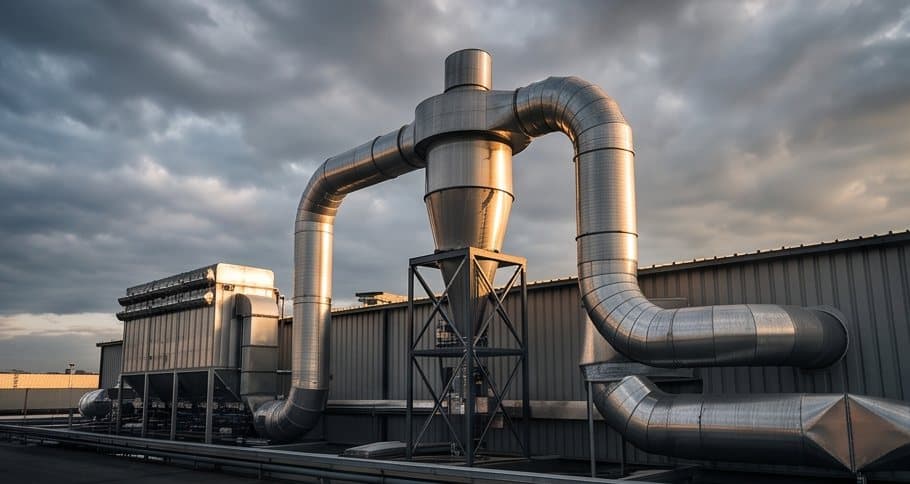
 Illustrative
Baghouse · Cartridge · Pulse-Jet · Point Capture
Blowers for industrial dust collection & extraction
A dust collection system is only as good as the air it moves. The main fan has to pull enough air through every hood and duct to hold capture velocity, then push it through a loading filter that fights back harder every hour. Yash builds the centrifugal blowers that move that air and the high-pressure machines that clean the filter.
A baghouse only pulls dust if the fan holds suction against a loading filter. Size for the dirty-filter pressure drop, not the clean one, and the collector keeps the air legal.
Yash Blowers · Engineering desk
FITWhich Yash families fit
Machines built for dust collection
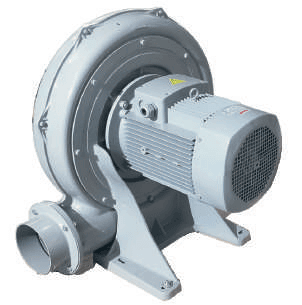
The main collector fan for most baghouse and cartridge systems — high m³/hr at the moderate static pressure a loading filter needs, with a flat-ish curve that holds airflow as the cake builds.
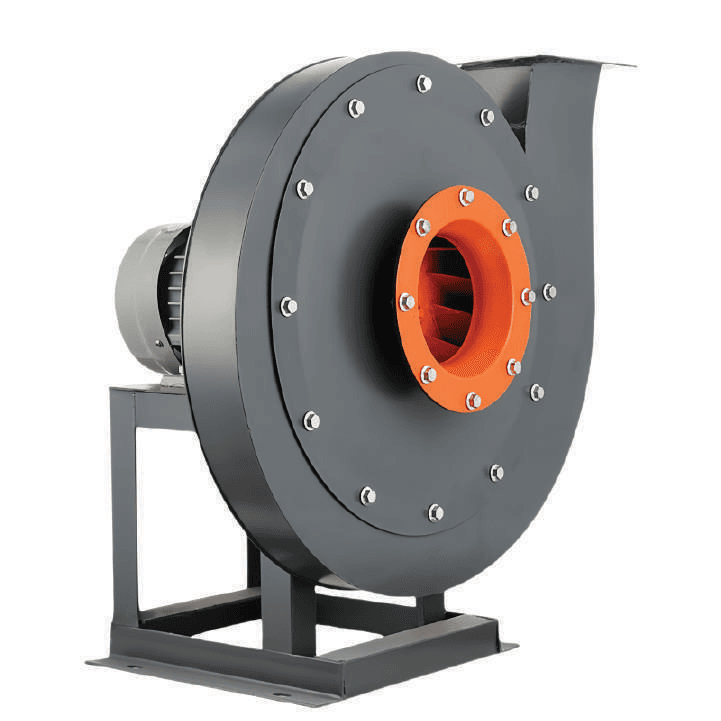
Higher static headroom for long duct runs, deep filters and pulse-jet cleaning supply where a standard centrifugal fan runs out of pressure.
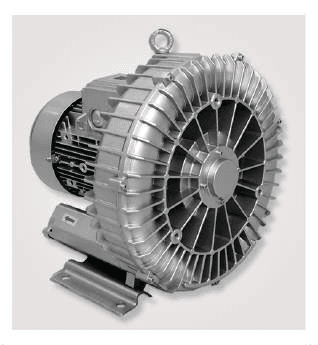
Oil-free suction for point-capture benches, weld-fume arms and small source-capture hoods that run all shift with almost nothing to service.
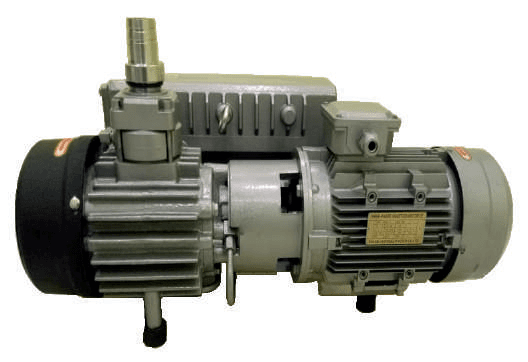
For concentrated high-vacuum duty — pulling fines through narrow nozzles or a small central vacuum-cleaning point where a ring blower runs out of suction.
APPThe engineering
The problem: dust is a moving target and the filter fights back
Every grinding wheel, bagging spout, sander, mixer and transfer point throws dust into the air, and a dust collection system exists to catch it before it settles on the plant, chokes a bearing or reaches an explosive concentration. The job sounds simple — pull the dusty air away and filter it — but it is deceptively hard to keep running, because the two halves of the system pull against each other. You need a high volume of air to capture dust at every hood, and you have to force that same air through a fabric or cartridge filter whose resistance climbs steadily as it loads. Under-size the air mover and the hoods stop capturing; the dust escapes into the workshop and the collector becomes a very expensive box of dirty filters.
The heart of the system is the main dust-collector fan, and it almost always sits on the clean-air side, downstream of the baghouse or cartridge collector, so it pulls the whole system into negative pressure and handles clean air rather than abrasive dust. Get this fan right and everything upstream works: the hoods capture, the ducts stay swept clean, and the filter does its job at a pressure drop you designed for. Get it wrong and no amount of good ducting or good filter media will save the installation.
Capture velocity sets the airflow, and airflow sets the fan
Sizing starts at the dust source, not at the fan. Each hood or pickup point needs enough capture velocityat the point where the dust is generated to draw it into the hood against room draughts and the momentum of the dust itself. Fine, slow-settling dust from a mixer might need only 0.5 – 1.0 m/s of capture velocity at the hood face, while a grinding operation that throws heavy particles at speed can need 2.5 – 5.0 m/s. Multiply the required face velocity by the hood open area and you get the airflow that hood demands, in m³/hr. Do that for every pickup on the system, add them up, add a margin for future points and duct leakage, and you have the total system airflow the main fan must deliver.
Airflow also has to keep the dust moving once it is in the duct. Below a minimum transport (conveying) velocity— typically 15 – 20 m/s for ordinary industrial dust, higher for heavy or sticky material — particles drop out of the airstream and settle in the ducting, narrowing it, unbalancing the system and, with combustible dust, building a fuel layer. So the ducts are sized to hold that velocity at the design airflow, and the fan has to deliver the airflow that keeps every branch above its transport minimum. This is the first number that separates dust collection from ordinary ventilation: you are not just moving air, you are carrying a solid load in it.
Static pressure is the other half — and it rises as the filter loads
Airflow tells you how much air; system static pressuretells you how hard the fan has to push to move it. On a dust collector the static pressure the fan must overcome is the sum of three things: the losses down the ducting and through the hoods, the pressure drop across the filter media, and the entry and exit losses. Long runs, tight elbows and undersized branches all add duct loss, which is why a real system is measured, not guessed.
The part that catches people out is the filter resistance. A clean bag or cartridge starts at a low pressure drop, but as dust builds a cake on the media the resistance climbs — often from around 250 Pa clean to 1,500 – 2,500 Pa or more at the point where cleaning is triggered. The fan sees this as rising static pressure, and on a fixed-speed centrifugal blower rising static pressure means falling airflow. Let the filter load too far and the airflow sags below capture velocity at the hoods before it ever trips an alarm. This is exactly why a centrifugal blower suits the duty: its fan curve is relatively flat over the working range, so it holds airflow reasonably well as the filter loads, and it has the pressure headroom to keep pulling when a baghouse is dirty. Size the fan for the dirty-filter static pressure, not the clean one, or the system only works on the day you commission it.
The solution, part one: the main collector fan
For the main fan on a baghouse or cartridge collector — high m³/hr at a few hundred to a couple of thousand pascals of static pressure — a centrifugal bloweris the right tool. Yash's CX-series centrifugal blowers cover the general run of workshop and process collectors, moving large air volumes at the moderate static pressure a bag or cartridge system needs, with the flat-ish curve that holds airflow as the cake builds. Where the ducting is long, the filter is deep, or the system runs at higher pressure drop, the high-pressure 919-series centrifugal blowers give you the extra static headroom without stepping up to a positive-displacement machine.
Because the fan sits on the clean side, it normally handles filtered air, which protects the impeller. But no filter is perfect on a bag failure or during cleaning, so on abrasive dust it is worth specifying a robust impeller and, where the duty is severe, wear-resistant construction. Yash machines are cast, machined and dynamically balanced in-house, which keeps vibration down over long continuous running — the enemy of any fan that runs three shifts a day. Mount the fan after the collector, fit a flexible connector to keep duct-borne vibration out of the casing, and give it an isolation damper so a bag change does not mean shutting the whole plant.
The solution, part two: pulse-jet filter cleaning
A filter that only loads and never cleans is a filter that blinds shut in a shift. Modern baghouse and cartridge collectors clean themselves with pulse-jetcleaning: a short, sharp blast of compressed or high-pressure air is fired down into each bag or cartridge in turn, momentarily reversing the flow and snapping the dust cake off the media so it falls into the hopper. The pulse lasts a fraction of a second and has to arrive with enough pressure and volume to shock the whole length of the element, which is a very different duty from the steady high-flow pull of the main fan — it needs higher pressure in short bursts, not sustained volume.
Where a plant does not want to run its main compressed-air system for this, or wants a dedicated cleaning supply, a high-pressure centrifugal blowerprovides the reverse-pulse air. The Yash 919 high-pressure series delivers the pressure a pulse-jet manifold needs to clean bags and cartridges reliably, tuned so the cleaning is effective without hammering the media and shortening its life. Good pulse cleaning is what keeps the filter's working pressure drop bounded, which in turn is what keeps the main fan's airflow — and your capture velocity — stable across the shift.
The solution, part three: point capture and light conveying
Not every dust problem is a central baghouse. A single downdraft bench, a weld-fume arm, a small source-capture hood or a short pneumatic pickup for collected fines needs suction at one point rather than balanced airflow across a whole network. For these, a single-stage turbine (ring) blowergives oil-free suction with a single moving part — ideal for a compact source-capture unit that runs all day with almost nothing to service. Where the capture point needs deeper vacuum — drawing fines through a narrow nozzle, pulling from a long small-bore hose, or serving a small central vacuum-cleaning point — a high-vacuum pump holds the suction that a regenerative blower runs out of. These are the machines for the concentrated, high-vacuum end of dust handling, distinct from the high-volume, low-vacuum job of the main collector fan.
Abrasion, wear and keeping the system alive
Abrasive dust — silica, alumina, metal grinding swarf, foundry sand — wears everything it touches. Keep the fan on the clean side so it sees filtered air, hold duct velocity high enough to sweep the dust but not so high that it sandblasts the elbows, and use long-radius bends and wear-backs at the impact points. On the fan itself, specify a heavier or coated impeller for severe duty and check balance periodically, because a worn impeller goes out of balance and destroys its own bearings. Design access for filter changes and hopper discharge from the start; a collector that is hard to service is a collector that gets run blinded.
Combustible dust: know before you specify
Many common dusts — wood, flour, sugar, aluminium, coal, many plastics and metals — are combustible, and a dust collector that concentrates them is exactly where an explosion can start. This is a specialist area governed by standards such as NFPA and ATEX, and it drives real decisions: explosion venting or suppression on the collector, spark detection and abort systems on the inlet duct, correct electrical area classification, bonding and earthing against static, and careful choice of fan location and construction. Treat combustible-dust handling as an engineered safety system, not an afterthought — if your dust is on the combustible list, bring that into the specification at the start and design the whole system, blower included, to suit. Send us the dust type, the airflow and the filter pressure drop, and we will help you match the right Yash machine to each duty.
SIZESizing guidance
| Duty | Airflow (m³/hr) | Static pressure | Example Yash models |
|---|---|---|---|
| Small workshop collector | 1,000 – 3,000 | 800 – 1,500 Pa | YBCB-CX-125A |
| Medium baghouse / cartridge | 3,000 – 8,000 | 1,200 – 2,000 Pa | YBCB-CX-150A · YBCB-TBM-200-20 |
| Large / long-duct collector | 8,000 – 20,000 | 2,000 – 3,500 Pa | YBCB-HP-919-5.5 · YBCB-HP-919-11 |
| Pulse-jet cleaning supply | Low (short bursts) | High pressure | YBCB-HP-919-5.5 · YBCB-HP-919-11 |
| Point / source capture | 300 – 900 | 150 – 300 mbar | YEBL-1-420 · YEBL-1-530 |
| High-vacuum pickup | Low | High vacuum | ACME-202 · ACME-302 |
Indicative only — final selection depends on your exact duty point, altitude and air temperature. Send the numbers and an engineer confirms the model.
FAQFrequently asked questions
How do I size the main fan for a dust collector?
Work from the dust sources out. Set the capture velocity each hood needs, multiply by hood area for its airflow, and add up every pickup plus a margin and leakage to get total system airflow in m³/hr. Then add the duct and hood losses to the dirty-filter pressure drop to get the static pressure. Size the fan for the dirty-filter condition, not the clean one — pick the smallest Yash centrifugal blower that covers both the airflow and that static pressure.
Why does my dust collector lose suction as it runs?
As dust builds a cake on the bags or cartridges, the filter's resistance rises — often from around 250 Pa clean to 1,500–2,500 Pa loaded. A fixed-speed centrifugal fan responds to rising static pressure by moving less air, so airflow and hood capture velocity fall as the filter loads. Effective pulse-jet cleaning keeps the filter's pressure drop bounded, and sizing the fan for the dirty-filter static pressure keeps airflow stable across the shift.
Do I need a separate blower for pulse-jet cleaning?
Pulse-jet cleaning is a different duty from the main fan — short, high-pressure bursts rather than sustained high volume. Many plants clean from their compressed-air system, but where you want a dedicated supply or don't want to load the plant air, a high-pressure centrifugal blower such as the Yash 919 series provides the reverse-pulse air to snap the dust cake off the media.
Can Yash blowers handle abrasive dust?
The main collector fan normally sits on the clean-air side downstream of the filter, so it handles filtered air and is protected from the worst of the abrasion. For severe duty we can specify a heavier or coated impeller, and all Yash machines are dynamically balanced in-house to keep vibration low over long continuous running. Tell us the dust type — including whether it is combustible — and we will match the construction to it.
RFQ / Request for Quotation
Sizing a blower for dust collection?
Send duty point, flow and pressure — an engineer sizes the right model and quotes ex-works Faridabad, FOB Nhava Sheva or CIF your port.