
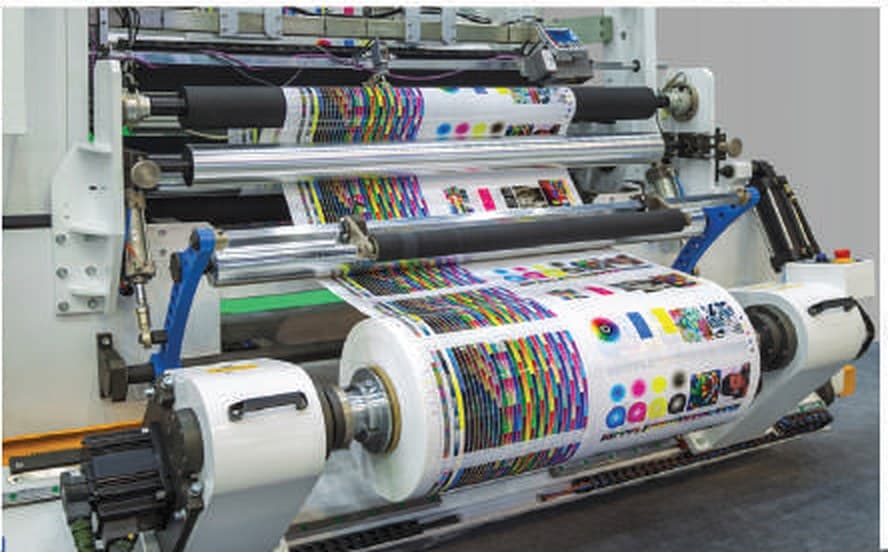
Offset · Screen · Folding · Coating · Packaging
Blowers for printing, paper feeding & packaging machines
A sheet-fed press needs vacuum to pick and hold paper and pressure to fan and float it — at the same time, from the same machine. One regenerative ring blower does both, oil-free and quiet, replacing a separate vacuum pump and air compressor. Yash builds the range and helps you size it by nozzle count and sheet size.
A press only holds register if the vacuum holds the sheet. Steady, oil-free suction is the difference between a clean run and a stack of misfeeds.
Yash Blowers · Engineering desk
FITWhich Yash families fit
Machines built for printing & packaging
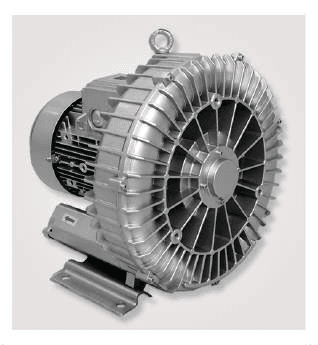
The default for most feeders: one impeller taps vacuum on the inlet for the suckers and feed table and pressure on the outlet for the blow rail. Covers A3 to B2 offset, folders and packaging pick-and-place from 0.75 HP up.
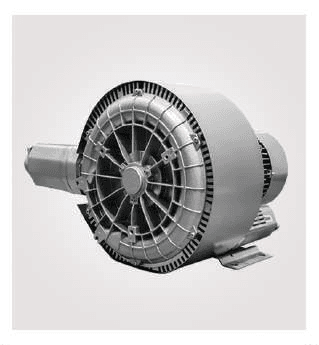
Two stacked impellers for the higher vacuum a large screen-printing bed or a long perforated transfer belt needs, where a single stage runs out of head. Same oil-free, quiet duty.
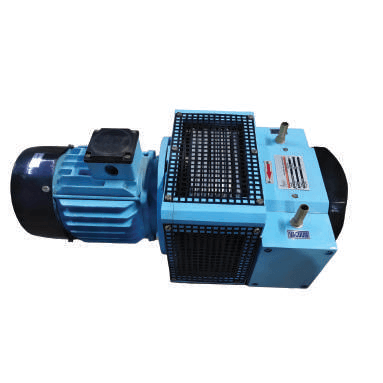
Dedicated vacuum units for suction-only duty — vacuum hold-down beds, screen exposure frames and delivery stacking where you do not need the blow side of a combined blower.
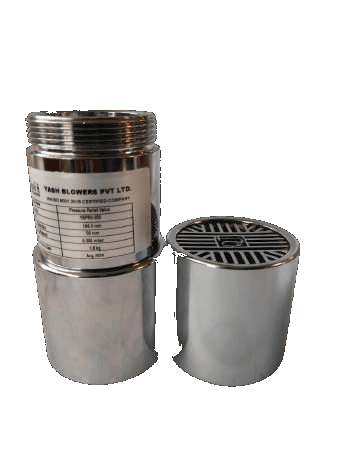
Inlet filtration to keep paper dust and lint out of the impeller and off the printed sheet — the one regular service item on a pressroom blower.
APPThe engineering
The problem: a sheet-fed press needs vacuum and pressure at the same instant
Every sheet-fed printing and paper-converting machine has the same pneumatic problem to solve, thousands of times an hour: it has to take the top sheet off a stack, one at a time, without dragging a second sheet with it, register it accurately, carry it through the print or fold or cut, and lay it down flat on the delivery pile. Doing that reliably needs two opposite things happening at once. It needs vacuumto grip the sheet — suckers that lift the top sheet at the feeder head, a perforated feed table or tape that holds the sheet flat as it advances, and delivery suckers or a vacuum belt that pull the printed sheet down onto the stack. And it needs pressure— blow air that fans the top of the pile so sheets separate cleanly, air knives that float the leading edge, and blast nozzles that break the vacuum bond between sheets so a single sheet lifts instead of two stuck together.
If either side is weak, the machine misfeeds. Too little vacuum and the sucker drops the sheet or the sheet skews on the table, throwing register off and spoiling the print. Too little blow air and sheets cling together, so the feeder pulls doubles, jams, or streaks wet ink across the next sheet. On a press running 12,000–18,000 sheets an hour, a misfeed rate of even a fraction of a percent is a real number of ruined sheets, ink, plates and time. The air system is not an accessory bolted on the side of the press; it is what makes the paper move.
Why one regenerative ring blower replaces a pump plus a compressor
The traditional way to supply this was two separate machines: a vacuum pump for the suction side and an air compressor for the blow side. That is two motors, two sets of maintenance, two failure points, and — if the compressor is oil-lubricated — oil mist riding into the air that touches the paper. A regenerative blower, also called a ring blower, side channel blower or vortex blower, does away with all of that. It is a single die-cast aluminium impeller spinning in a side channel. The inlet side of that impeller pulls a vacuum; the outlet side pushes pressure. Both ports are live at once on the same running machine, so a single blower taps vacuum from its inlet and pressure from its outlet and feeds both circuits of the press together.
That combined pressure-and-vacuum tapping is the whole reason ring blowers dominate this application. You plumb the blower's suction port to the feeder and delivery vacuum manifold, and the blower's discharge port to the blow-air rail that fans and separates the sheets. One motor, one machine, both jobs. A single-stage regenerative blower typically delivers useful duty in the region of 200–300 mbar of vacuum on the inlet and a comparable head of pressure on the outlet — exactly the band sheet handling needs, since you are lifting paper and breaking a light vacuum bond, not evacuating a chamber. Where a machine needs higher vacuum, a double-stage blower stacks two impellers to reach further down without a step change in noise or maintenance.
Oil-free is not optional in printing
The single most important property of the air on a printing line is that it must be oil-free. A regenerative blower has one moving part — the impeller — running on sealed bearings, with no oil anywhere in the air path. Nothing lubricates the air stream, so nothing contaminates it. That matters because the air and vacuum on a press are in direct contact with the sheet surface: blow air passes over the top of the pile and across the leading edge, and vacuum is pulled through the sheet at the sucker and the feed table. Any oil carried in that air lands on the paper. On a printed sheet, an oil spot is a rejected sheet — it repels ink, ruins coating adhesion, shows through on the finished job, and on food or pharma cartons it is a contamination failure outright. An oil-lubricated vane pump or piston compressor puts that risk into the system every hour it runs. A ring blower removes the risk by design, because there is no oil to carry.
The same single-impeller design is why the blower runs quiet and continuous. There are no vanes to wear and replace, no pistons pulsing, and no reciprocating parts hammering the mounts. The air delivery is smooth rather than pulsed, which matters when that air is holding a sheet in register — a pulsing supply makes the sheet flutter. And a pressroom is a place people work in all day, so the low, steady note of a regenerative blower against the clatter of a reciprocating pump is a real working condition, not a nicety. Yash blowers are cast, machined and dynamically balanced in-house, which is what lets them hold that quiet, vibration-free running through the round-the-clock shifts a commercial print shop puts on them.
Where it applies: presses, screens, folders, coaters and packaging
Offset pressesare the classic case. The feeder head uses vacuum suckers to lift each sheet and blow air to fan and float the pile; the feed board holds the sheet down with vacuum tape or a perforated table; the delivery uses vacuum to stack the printed sheet flat. A single ring blower — or a small bank of them on a large-format press — serves all of it.
Screen printing leans on the vacuum side. The substrate, whether paper, board, textile panel or plastic sheet, has to sit dead flat and dead still on the print bed while the squeegee passes, or the image shifts and the registration between colours breaks. A vacuum table pulls the substrate down onto the bed through a grid of holes, and a regenerative blower is what pulls that vacuum. Flat-bed and cylinder screen lines, screen dryers with vacuum hold-down, and vacuum frames for stencil exposure all run on the same principle.
Paper folding, cutting and converting machines use vacuum to pick and register sheets into the folder or guillotine feed, and blow air to separate and guide. UV and aqueous coating lines use vacuum transfer belts and hold-down so the wet-coated sheet does not lift or curl before it sets. Labelling, cartoning and sealing machines in packaging use vacuum to pick a label or a flat carton blank off the magazine and blow air to open the carton or hold a flap — the same pick-and-place logic as a feeder head, just applied to a blank instead of a printed sheet. In every one of these, the machine builder has designed around a source of clean vacuum and clean pressure, and a regenerative blower is the standard way to supply both.
The solution: size by nozzle count and sheet size
Sizing a blower for a printing or packaging machine comes down to two numbers, and both follow from the machine, not from guesswork. The first is vacuum and pressure level, set by what the machine has to do: light sheet hold-down and sheet separation live around 150–200 mbar, a demanding feeder or a heavy-board vacuum table wants 200–300 mbar, and a large vacuum bed or a long transfer belt with a lot of open perforation can call for a double-stage machine. The second is air flow, measured in m³/hr, and this is set by how much air the machine leaks and moves — which in a sheet handler is a direct function of the number of suction and blow nozzles and the size of the sheet they act on.
The reason nozzle count and sheet size drive the flow is that every open sucker, every hole in a vacuum table not covered by paper, and every blow nozzle is a leak path the blower has to keep supplied. A small A3 / half-sheet feeder with a handful of suckers moves little air and lives on a 0.75–1 HP blower. A full-size B1 or large-format offset press with many feeder and delivery suckers, a big perforated feed table and a full blow rail moves far more air and needs a larger frame or a pair of blowers. A big screen-printing vacuum bed is mostly about open area: the larger the bed and the more of it is uncovered by the substrate, the more flow the blower needs to hold the vacuum against that leakage. So the practical method is: read off the vacuum or pressure the machine builder specifies, total the nozzles and the sheet or bed area to estimate the flow, add a margin for leaks and filter loss, and pick the smallest Yash model that covers both numbers. The table below is a starting point; send us the machine and the sheet size and we confirm the model.
Two fittings finish the installation. An inlet air filter keeps paper dust and lint — which a pressroom generates constantly — out of the impeller and off the sheet, and it is the one service item that actually needs regular attention on a ring blower. A relief or vacuum-limiting valve protects the machine if a line is throttled or a table is fully covered, so the blower is never dead-headed. Both are in the Yash catalogue and both should be specified with the blower, not added later.
Why this is a Yash export application
Printing and packaging plants run their presses hard and cannot afford a feeder down for want of a blower. Yash manufactures the single-stage and double-stage regenerative range in-house, stocks the filters and valves that go with them, and ships blowers and spares worldwide in seaworthy packing with test certificates on request. Because the blower is a single, balanced impeller with no wearing vanes, the maintenance a print shop signs up for is an inlet filter change and a bearing life measured in years — not the vane and seal replacement an oil-lubricated pump demands. That is the case for one quiet, oil-free ring blower doing the work of a pump and a compressor on every sheet-fed line in the plant.
SIZESizing guidance
| Machine / press type | Sheet or bed size | Vacuum / pressure & air flow | Example Yash model |
|---|---|---|---|
| Small offset / label feeder | A3 – half sheet | ≈ 150 mbar · low flow | YEBL-1-80 |
| Mid offset press feeder + delivery | B3 – B2 | ≈ 180 mbar · medium flow | YEBL-1-145 |
| Large-format offset, full blow rail | B1 and up | ≈ 200–250 mbar · high flow | YEBL-1-210 |
| Screen printing vacuum bed | Large flat bed, high open area | ≈ 250–300 mbar vacuum | YEBL-DS-88 |
| UV coater / long transfer belt | B1 perforated belt | ≈ 300 mbar vacuum | YEBL-DS-110 |
| Vacuum hold-down / exposure frame (suction only) | Flat-bed table | High vacuum, no blow side | YELVD-300 · YELV-300 |
Indicative only — final selection depends on your exact duty point, altitude and air temperature. Send the numbers and an engineer confirms the model.
FAQFrequently asked questions
Can one blower give both the vacuum and the blow air a press needs?
Yes — that is the point of a regenerative ring blower. The impeller pulls a vacuum on its inlet and pushes pressure on its outlet at the same time, so you plumb the suction port to the feeder and delivery vacuum manifold and the discharge port to the blow-air rail. One machine replaces a separate vacuum pump and air compressor.
Why does the air have to be oil-free for printing?
Because the blow air and vacuum are in direct contact with the sheet. Any oil carried in the air lands on the paper, and an oil spot on a printed sheet repels ink, ruins coating adhesion and shows through the finished job — on food and pharma cartons it is a contamination failure. A ring blower has no oil in the air path at all, so the risk is removed by design, unlike an oil-lubricated vane pump or piston compressor.
How do I size the blower for my machine?
Two numbers. Vacuum or pressure level comes from the machine — roughly 150–200 mbar for sheet hold-down and separation, 200–300 mbar for a demanding feeder or a large vacuum bed. Air flow comes from the number of suction and blow nozzles and the sheet or bed size, because every open sucker and uncovered table hole is a leak the blower must supply. Total those, add a margin for leaks and filter loss, and pick the smallest Yash model that covers both. Send us the press type and sheet size and we confirm it.
Do you export blowers for printing and packaging machinery?
Yes. We ship single-stage and double-stage regenerative blowers, vacuum units, filters and spares worldwide in seaworthy packing, with test certificates on request, and support OEM machine builders as well as print shops running their own presses.
RFQ / Request for Quotation
Sizing a blower for printing & packaging?
Send duty point, flow and pressure — an engineer sizes the right model and quotes ex-works Faridabad, FOB Nhava Sheva or CIF your port.