
Materials · Deep-vacuum de-airing
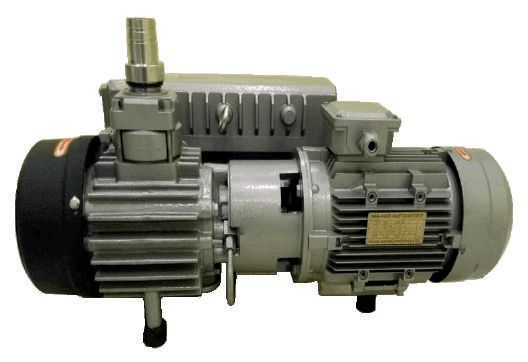
Vacuum Pump for Degassing Chamber
Degassing Chamber duty, sized right: deep static vacuum to pull entrained air from resins and silicones. Real Yash models, oil-free where it matters, ISO 9001:2015 and built in Faridabad since 1998.
- Duty
- deep static vacuum to pull entrained air from resins and silicones
- Airflow
- 10–140 m³/hr
- Vacuum
- −950 mbar and deeper
MDLRecommended models
Real Yash models whose published specifications sit inside this machine's duty window. Every figure is from our catalogue — click any model number for its full datasheet.
High Vacuum Pump
Full range →Oil-sealed rotary vane pumps for a deep, steady ultimate vacuum — hold the chamber low while resin fully de-airs.
Double Stage Oil Vacuum Pump
Full range →Two-stage oil-sealed pumps for the deepest ultimate vacuum on demanding degassing of silicones and casting resins.
| Model | Power | Flow (L/min) | Vacuum | Noise (dB) | Weight (kg) | Inlet |
|---|---|---|---|---|---|---|
| 2X-4A DSVP | 0.55 KW | 240 | ≤6x10⁻² PA/759.95 mm/hg | 75 | 54 | Φ25 mm |
| 2X-8A DSVP | 1.1 KW | 480 | ≤6x10⁻² PA/759.95 mm/hg | 78 | 70 | Φ25 mm |
DTYPulling bubbles out under deep vacuum
A degassing (vacuum) chamber removes entrained air from epoxy, silicone, resin and slurry by holding them under a deep static vacuum until the dissolved and trapped gas expands, rises and breaks. This is the opposite of a high-flow hold-down: the chamber is sealed, the flow is small, and the whole job is reaching and holding a deep ultimate vacuum long enough for the material to fully de-air. That rewards a pump built for deep ultimate vacuum — an oil-sealed rotary vane pump reaches the lowest pressures and holds them steadily, while a two-stage oil pump goes deeper still for demanding work. Where oil carryover is unwanted a dry pump handles less-critical degassing cleanly.
Yash ACME oil-sealed high-vacuum pumps and 2X two-stage rotary pumps are made for the deep, steady ultimate vacuum a degassing chamber lives on, and YBDVP dry pumps serve oil-free de-airing. ISO 9001:2015, built in Faridabad, sized on chamber volume and target ultimate, quoted in 24 hours with the inlet trap the service needs.
SZESizing note
Size on chamber volume for a reasonable pull-down time, then choose the pump by ultimate vacuum — the deeper and steadier the ultimate, the more completely the material de-airs. A cold trap or knock-out protects the pump from carryover on volatile resins.
Indicative only — final selection depends on your exact duty point, altitude and air temperature. Send the numbers and an engineer confirms the model.
REFExplore further
FAQVacuum Pump for Degassing Chamber — FAQs
- What vacuum pump do I need for a resin degassing chamber?
- Degassing is a deep-ultimate, low-flow duty. An oil-sealed rotary vane pump (ACME) reaches and holds the low pressure needed to pull dissolved air out of epoxy and silicone; a two-stage 2X pump goes deeper for demanding materials. Size the pump on chamber volume for pull-down and on ultimate vacuum for de-airing quality.
- How deep should the vacuum be to remove bubbles?
- The deeper the ultimate vacuum, the more completely trapped and dissolved gas expands and escapes — most casting resins want −950 mbar or lower held steadily. Protect the pump with a cold trap or knock-out pot when degassing volatile resins so carryover never reaches the pumping chamber.
RFQ / Request for Quotation
Sizing a vacuum pump for your Degassing Chamber?
Send your duty point (10–140 m³/hr at −950 mbar and deeper), the machine make and your site voltage — an engineer sizes the exact model and quotes within 24 hours.