
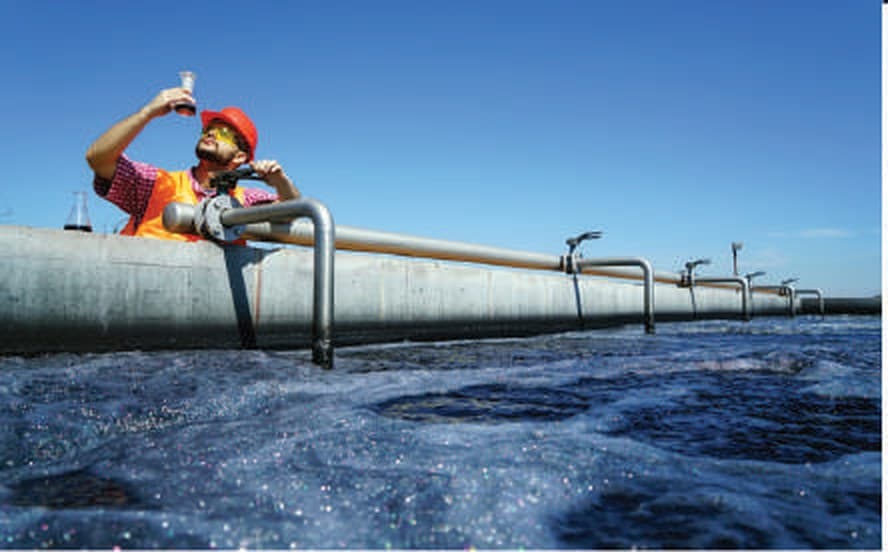
ETP · Industrial Wastewater · Equalization · SBR
Surpresseurs pour le traitement des effluents industriels
Un effluent industriel est plus exigeant qu'une eau usée domestique : charges organiques variables, chimie agressive, températures plus élevées. Nous choisissons la machine pour le point de fonctionnement réel, avec une marge honnête.
Industrial effluent shifts load, pH and temperature by the shift. An ETP blower has to hold oxygen through all of it — oil-free, 24/7, no excuses.
Yash Blowers · Engineering desk
FITLes familles Yash adaptées
Machines built for effluent treatment plants
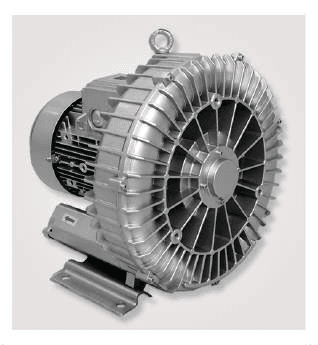
The workhorse for equalization-tank mixing and shallow aeration basins up to ~2 m deep — oil-free air for continuous or SBR duty on small to mid-size ETPs.
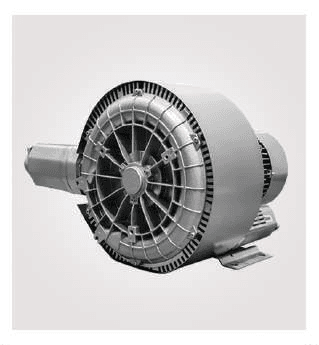
Higher pressure for deeper activated-sludge basins and long fine-bubble diffuser grids where a single stage runs short of head.
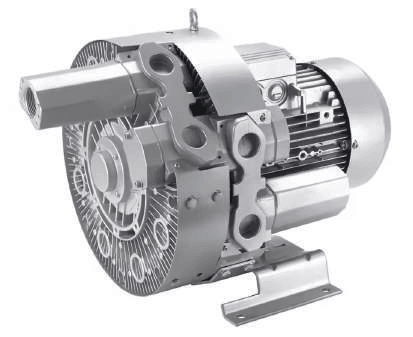
For deep aeration tanks 4 m+ down or plants where ageing diffuser membranes push back-pressure high, this series holds pressure a standard blower cannot.
Essential on an ETP: caps discharge pressure and bleeds off air if a diffuser line blocks or a header valve is throttled during a settle phase, protecting the blower from variable back-pressure.
APPL'ingénierie
The problem: industrial effluent is not municipal sewage
A municipal sewage works treats a broadly predictable stream — domestic waste at a fairly constant strength, arriving on a daily flow curve you can design around. An industrial effluent treatment plant (ETP) has none of that comfort. It treats whatever the factory upstream discharges: a dye-house batch, a caustic clean-in-place cycle, a spike of high-COD process liquor, a warm condensate stream, a slug of solvent-laden wash-water. Organic load can jump by a factor of three or four inside a shift, pH can wander, temperature can run well above ambient, and the effluent is often mildly corrosive. The biology in the aeration tank has to absorb all of that and still meet a discharge consent — and the only way it does is by holding dissolved oxygenabove roughly 2 mg/L across the whole swing.
That is the job the aeration blower is bought to do. Undersize it, or let it run out of turndown, and dissolved oxygen collapses the moment a strong batch lands — the sludge goes anaerobic, filaments take over, the settling tank throws solids and the plant fails its consent. Oversize it with no way to throttle back and you burn power blowing air the biology cannot use, and you strip so much that nitrification stalls. The blower is the single largest energy consumer on most ETPs, and it is also the single component most able to sink the plant when it is wrong.
Two duties on one plant: aeration and mixing
An ETP asks a blower to do two distinct things, often in different tanks. The first is oxygen transfer in the aeration or activated-sludge basin — pushing air through fine-bubble diffusers on the floor so the bugs have the oxygen to oxidise the organic load. The second is mixing and agitation, most visibly in the equalization tank that sits ahead of biological treatment. That equalization tank exists precisely to flatten the load swing described above; coarse-bubble air blown across its floor keeps solids in suspension so nothing settles and septicises, and buffers the strong batches into a smoother feed the biology can actually cope with. Both duties are low-pressure, high-flow air — which is exactly what a regenerative or turbine blower is built to deliver, and exactly the wrong job for a high-pressure reciprocating compressor.
Because these are two duties, they are often two pressures. A shallow equalization tank may need only 200–300 mbar; a deep aeration basin with fine-bubble diffusers 5 m down needs far more. Designing the ETP means treating them separately and picking a blower for each, rather than forcing one machine to cover both badly.
Why oil-free air, and why it matters more on an ETP
The air a blower pushes into an aeration tank goes straight into a living biological culture. Any oil carried over from the air path is a contaminant that coats diffuser membranes, blinds their pores and, over time, poisons the biomass you are paying to keep alive. A regenerative or turbine blower has a single die-cast aluminium impeller and no oil in the air stream at all — no rings, no lubricated vanes, nothing to carry over. That is why diffused-air ETPs run on blowers, not oil-flooded compressors: the air is clean by design, and there is very little to service beyond the inlet filter. It also means the diffuser back-pressure the blower sees stays predictable, because the membranes are not slowly clogging with oil film.
Yash blowers are cast, machined and dynamically balanced in-house, which is what lets them hold up under the continuous, round-the-clock duty an ETP demands. There is no downtime window on a discharge consent — the plant runs whenever the factory runs — so the machine has to tolerate 24/7 operation without the vibration that kills bearings and the heat soak that warm effluent and a hot pump room add on top.
Continuous vs. batch (SBR): the turndown question
How the blower is controlled depends on how the plant is run. A conventional extended-aeration or activated-sludge ETP runs its blowers more or less continuously, trimming output to hold a dissolved-oxygen set-point as load rises and falls. A sequencing batch reactor (SBR) runs the same tank through timed phases — fill, aerate, settle, decant — so the blower is driven hard during the aerate phase and switched off entirely while the sludge settles and the clear supernatant is drawn off. Both patterns punish a blower that cannot follow demand.
The answer is turndown. Rather than one large blower thrashing against a throttle, most well-designed ETPs run several smaller blowers on a shared header and stage them in and out as load changes — two running at part load overnight, four during a strong daytime batch. Adding a variable-frequency drive on the lead machine lets it trim continuously to a DO probe, so the plant matches air to demand instead of dumping surplus. This staged approach also builds in the redundancy a consent-bound plant needs: an N+1 arrangement, each unit isolated by a non-return valve on the header, means a single blower failure never takes aeration offline. Sizing a bank of Yash blowers instead of one giant machine is almost always the cheaper plant to run and the safer one to operate.
The solution: match blower pressure to tank depth, then to load
Sizing ETP aeration starts with the same physics as any diffused-air system. Pressure is set by how deep the diffusers sit: the blower has to overcome the water column above them plus the diffuser membrane resistance and pipe losses. As a working rule, every metre of liquid depth is about 100 mbar, so diffusers 4 m down need roughly 400 mbar at the floor before you add membrane and pipe losses — which is why deep aeration basins move past a single-stage blower into double-stage and high-pressure machines. Shallow equalization tanks, by contrast, sit comfortably on a single-stage unit.
Airflow is set by load, not depth. The mass of oxygen the biology needs each hour follows the organic load (the BOD/COD removed) plus any nitrification demand, and because that load swings on an ETP you size the blowers for the peak and rely on turndown to sit efficiently at the trough. The practical method is: fix the diffuser depth to get pressure, total the peak air demand to get flow, add a margin for the strong-batch spike, and pick the smallest Yash model — or bank of models — that covers both. Use the table below as a starting point, then send us the real tank dimensions and load figures and we confirm the selection.
Protecting the blower on a variable-back-pressure plant
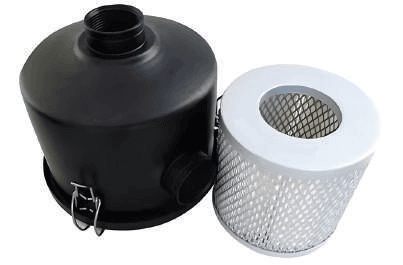
An ETP is harder on a blower than a clean-air duty because the back-pressure it sees moves around. Diffuser membranes stiffen as they age, a header valve gets throttled during a settle phase, a fine-bubble grid slowly fouls — any of these raises the pressure the blower works against, and a positive-displacement or turbine machine will simply keep pushing until something gives. Two fittings guard against that, and both are in the Yash catalogue. An inlet filter keeps dust and pump-room grit out of the impeller, protecting the single tightest clearance in the machine. A pressure-relief valve caps the discharge pressure, bleeding air off if a diffuser line is blocked or a valve is closed against a running blower, so the motor is never driven past its safe operating point. On a plant where back-pressure is expected to vary, that relief valve is not optional — it is the cheapest insurance on the whole aeration line.
Between an oil-free air path, a bank of blowers staged for turndown, an inlet filter and a relief valve, an ETP aeration system holds dissolved oxygen through the load swing that industrial effluent throws at it — which is the whole point of buying the blower in the first place. Yash's in-house spares and export dispatch mean a machine that does go down is a same-week fix, not a breached consent.
SIZEAide au dimensionnement
| Tank / diffuser depth | Approx. pressure needed | Blower type | Example Yash models |
|---|---|---|---|
| ≤ 2.0 m (equalization / mixing) | ≥ 250 mbar | Single-stage turbine | YEBL-1-270 · YEBL-1-400 |
| 2.0 – 3.0 m (shallow aeration) | ≥ 350 mbar | Single / double stage | YEBL-1-530 · YEBL-DS-230V |
| 3.0 – 4.0 m (activated sludge) | ≥ 450 mbar | Double stage | YEBL-DS-320V · YEBL-DS-520 |
| 4.0 – 5.0 m (deep aeration / SBR) | ≥ 550 mbar | Double stage / HP | YEBL-DS-520 · YEBL-HP-DS-120 |
| Deep basin / high back-pressure | 600 – 900 mbar | High-pressure series | YEBL-HP-DS-120 · YEBL-HP-DS-165 |
Indicative only — final selection depends on your exact duty point, altitude and air temperature. Send the numbers and an engineer confirms the model.
FAQFrequently asked questions
What size blower does an effluent treatment plant need?
It follows two numbers: pressure and flow. Pressure comes from how deep the diffusers sit — roughly 100 mbar per metre of liquid, plus membrane and pipe losses — so a 4 m aeration basin needs a blower rated well above 400 mbar. Flow comes from the peak organic load the biology has to oxidise. Size for the peak, rely on turndown at the trough, and pick the smallest Yash model or bank of models that covers both. Send us your tank depth and load figures and we confirm the selection.
How is an ETP blower different from a sewage (STP) blower?
The machine can be the same family, but the duty is harder. Industrial effluent swings far more than municipal sewage — higher and more variable strength, sometimes warm or mildly corrosive, often treated in batches (SBR). That puts a premium on turndown and on protecting the blower from variable back-pressure with an inlet filter and a pressure-relief valve. We size ETP aeration for the peak load and stage several blowers so the plant holds dissolved oxygen through the swing.
Do I need one big blower or several smaller ones?
For most ETPs, several smaller blowers on a shared header beat one large machine. Staging units in and out as load changes gives you the turndown an industrial plant needs, lets a VFD on the lead machine trim to a dissolved-oxygen probe, and builds in N+1 redundancy so a single failure never takes aeration offline. It is usually both the cheaper plant to run and the safer one to operate under a discharge consent.
Are Yash blowers oil-free, and do you export them for ETP projects?
Yes on both. Yash turbine and regenerative blowers have a single die-cast impeller and no oil in the air path, so the air reaching the aeration tank is clean and cannot blind diffuser membranes or harm the biomass. Effluent treatment is a core export market for us — we ship blowers, relief valves and spares worldwide in seaworthy crates, with test certificates on request and air-freight dispatch for spares.
RFQ / Request for Quotation
Dimensionner un surpresseur pour traitement des effluents industriels ?
Send duty point, flow and pressure — an engineer sizes the right model and quotes ex-works Faridabad, FOB Nhava Sheva or CIF your port.