
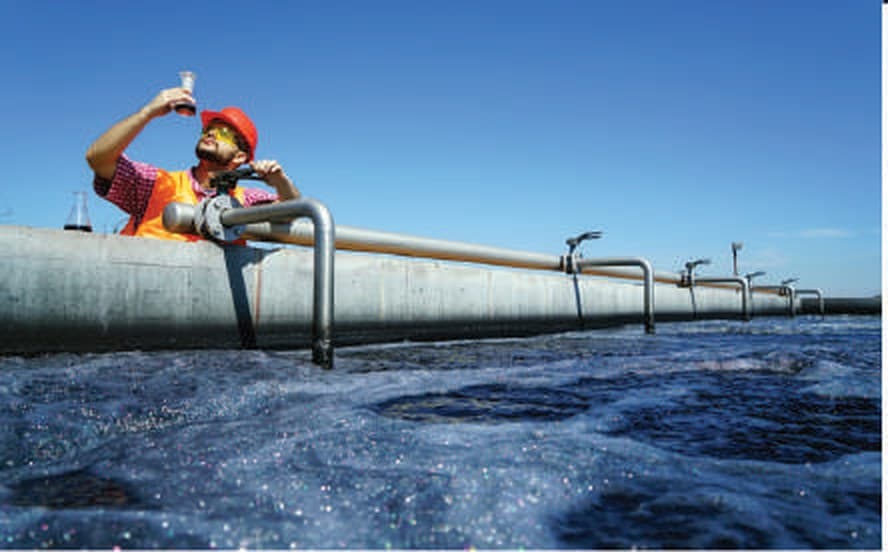
Activated sludge · Diffused aeration · 24/7 duty
Surpresseurs pour stations d'épuration : aération diffusée en 24/7
L'aération est le premier poste de consommation d'une station, et c'est le surpresseur qui fixe la facture. Nous dimensionnons à partir de la hauteur d'eau et de la charge en DBO — pas à l'estime : air exempt d'huile, service continu, machines qui tiennent des années.
Aeration is 50–60% of an STP's power bill — and it runs every hour of every day. The blower is where a plant controls that cost, or quietly bleeds it away.
Yash Blowers · Engineering desk
FITLes familles Yash adaptées
Machines built for sewage treatment plants
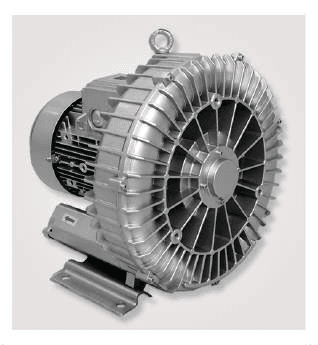
The workhorse for shallow package and small-municipal STP basins up to ~3 m deep — oil-free air to fine-bubble diffusers on continuous 24/7 duty around the 200–350 mbar band.
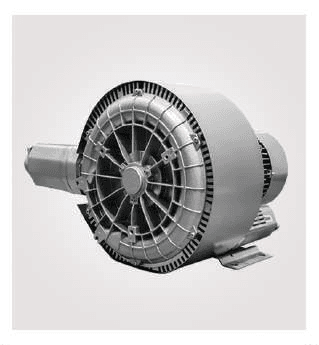
Higher head for deeper 4–5 m municipal aeration basins where a single stage runs out of pressure against the water column plus diffuser and header losses.
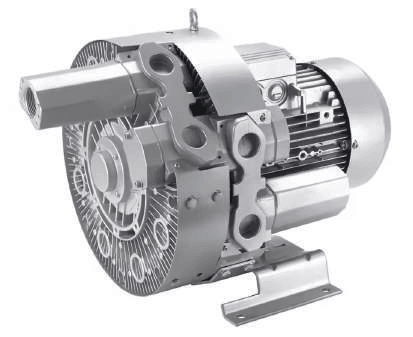
For deep 5–6 m+ basins or long diffuser grids with high back-pressure, the HP series holds 500 mbar-plus discharge that a standard blower cannot sustain continuously.
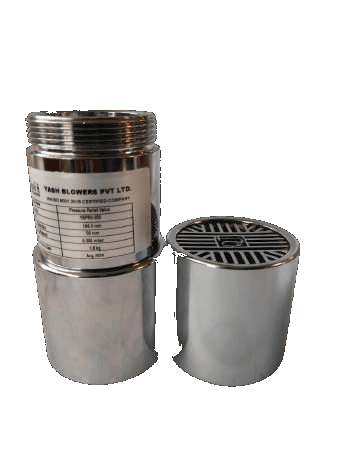
Inlet filter-silencer to keep grit, dust and insects out of the impeller and cut intake noise across the plant — specified as standard on every STP blower.
APPL'ingénierie
The problem: the bugs need oxygen, and they never stop asking
A sewage treatment plant runs on biology. In the activated-sludge process — the heart of almost every municipal and industrial STP — a dense population of aerobic bacteria, the “mixed liquor,” eats the organic load in the incoming sewage. Those bacteria break down the biochemical oxygen demand (BOD) and chemical oxygen demand (COD) that would otherwise foul a river, and to do that work they need dissolved oxygen — a lot of it, continuously. The whole plant hinges on one number: keeping dissolved oxygen (DO) in the aeration basin at roughly 1.5–2.5 mg/L. Let it fall and the aerobic culture starves, BOD removal collapses, and the plant breaches its discharge consent. Let it run wildly high and you are simply burning electricity.
The demand never pauses. Sewage arrives 24 hours a day, and the bacteria metabolise around the clock — there is no night shift, no weekend, no low season. An aeration blower that trips at 2 a.m. and stays down for a few hours does not cause an inconvenience; it lets the basin go septic, kills off the culture that took weeks to establish, and can take days of re-seeding to recover. Aeration in an STP is not a support utility. It is the process.
Two jobs at once: oxygen transfer and keeping the sludge in suspension
The air a blower pushes into the basin has to do two things simultaneously. First, oxygen transfer: bubbles rising through the mixed liquor dissolve oxygen into the water so the bacteria can respire. Second, mixing: the same rising air keeps the sludge floc in suspension so it stays in contact with both the oxygen and the incoming food, and never settles into dead, anaerobic pockets on the tank floor. Modern plants do both with fine-bubble diffused aeration — a grid of membrane disc or tube diffusers on the basin floor, fed by a blower through a header.
Fine-bubble diffusion wins on the number that decides your power bill: oxygen transfer efficiency. A cloud of 1–3 mm bubbles released at the floor has enormous surface area and a long rise time, so a far higher fraction of the oxygen in each m³ of air actually dissolves before the bubble breaks surface. That is why plants have largely abandoned coarse-bubble and mechanical surface aerators in favour of fine-bubble grids fed by blowers — and why the blower you choose, and how you size it, is the single biggest lever on the plant's operating cost.
Why energy dominates, and why right-sizing matters
Aeration typically accounts for 50–60 percentof the total electricity an STP consumes. Nothing else on the plant comes close. A blower that is oversized runs throttled and inefficient and wastes power every hour of every day; a blower that is undersized cannot hold DO when the load peaks and forces the process out of spec. Because the machine runs continuously, even a couple of points of efficiency compounds into a large number over a year — a blower sized correctly for the actual air demand and basin depth pays for itself many times over against one picked by guesswork. It is worth putting real numbers on it: a single 30 kW blower running 24 hours a day draws around 720 kWh every day, so a five-percent efficiency gap on that one machine is tens of thousands of units of electricity across a year — a cost a plant operator feels on every bill. The blower is where an STP either controls its running cost or quietly bleeds it away.
The air must also be oil-free. Any oil carried over from the blower into the diffuser grid blinds the membrane pores, wrecks the fine-bubble pattern the whole design depends on, and contaminates a process whose entire job is to clean water. A regenerative or centrifugal turbine blower has a single die-cast impeller, no vanes to wear and no oil anywhere in the air path — clean, dry, oil-free air delivered straight to the diffusers, which is exactly what an STP needs.
The solution: match blower pressure to basin depth
Sizing STP aeration comes down to two independent questions — how deep is the water above the diffusers, and how much air does the process need. Pressure is set by depth. The blower has to overcome the full water column standing over the diffuser, plus the diffuser membrane's own resistance and the losses down the header and drop-legs. The rule of thumb every plant designer uses is roughly 100 mbar per metreof water depth. So a diffuser sitting under a 4 m water column needs about 400 mbar just to beat the head, and once you add the diffuser and pipe losses you specify a blower rated comfortably above that — commonly 450–500 mbar for a 4 m basin.
Airflow, in m³/hr, is set by the oxygen demand — the population equivalent the plant serves, the incoming BOD load and the transfer efficiency of the diffuser grid. The two questions are separate: depth chooses the blower type (single-stage for shallow basins, double-stage or high-pressure for deep ones), and the required m³/hr chooses the blower sizewithin that type. The practical route is to fix the basin depth, total the air the diffuser grid needs, add a design margin, and pick the smallest Yash model that covers both pressure and flow. A shallow 2 m package-plant basin lives comfortably on a single-stage turbine blower around 200 mbar; a deep 5–6 m municipal basin needs the 500 mbar-plus head of a double-stage or high-pressure machine. Use the table below as a starting point, then send us the real load figures.
Protection: inlet filtration and pressure relief are not optional
A blower that ingests grit or insects through an open inlet chews up its own impeller and bearings. Every STP blower runs behind an inlet filter — a filter-silencer assembly that keeps airborne debris out of the machine and also knocks down the intake noise that would otherwise carry across the plant. And because a diffuser grid can partially blind with biofilm, or an isolation valve can be left shut during maintenance, every blower needs a pressure-relief valve set above its rated discharge. If the back-pressure ever climbs — a throttled header, a blocked line — the relief valve opens and vents before the blower overheats or the motor stalls. Both the filter assemblies and relief valves are in the Yash catalogue and are specified as standard on STP duty.
Redundancy: aeration is critical, so build in N+1
Because a stalled basin means a dead culture and a consent breach, no STP should ever run on a single blower. The standard is N+1 redundancy: if the process needs two blowers to hold DO at peak load, you install three, each on the shared header behind its own non-return valve, so any one machine can be taken out for service — or can fail — without the basin ever losing air. Sizing several smaller blowers across a header instead of one large machine has a second payoff: as the diurnal load rises and falls, the plant can stage blowers on and off to track demand instead of throttling one big unit, which claws back a meaningful slice of that 50–60 percent aeration energy bill.
Yash builds the full range that STP redundancy needs — from a single package-plant unit to a bank of turbine blowers on a municipal header — and keeps spares and impellers in-house with air-freight dispatch for export customers, so a down blower is a same-week fix rather than a plant emergency. Everything ships oil-free, dynamically balanced for the continuous duty an aeration basin demands, and rated in the exact mbar band your basin depth calls for.
SIZEAide au dimensionnement
| Basin / diffuser depth | Approx. pressure needed | Blower type | Example Yash models |
|---|---|---|---|
| ≤ 2.0 m (package plants) | ≥ 220 mbar | Single-stage turbine | YEBL-1-320V |
| 2.0 – 3.0 m (small STP) | ≥ 320 mbar | Single-stage turbine | YEBL-1-530 · YEBL-1-700 |
| 3.0 – 4.0 m (municipal basins) | ≥ 420 mbar | Single / double stage | YEBL-1-700 · YEBL-DS-320V |
| 4.0 – 5.0 m (deep municipal) | ≥ 500 mbar | Double stage | YEBL-DS-520 · YEBL-DS-900 |
| 5.0 – 6.0 m+ (high back-pressure) | 550 – 700 mbar | High-pressure series | YEBL-HP-DS-165 · YEBL-HP-TS-175 |
Indicative only — final selection depends on your exact duty point, altitude and air temperature. Send the numbers and an engineer confirms the model.
FAQFrequently asked questions
How do I size an aeration blower for my STP basin depth?
Pressure follows depth — roughly 100 mbar per metre of water column — plus the diffuser membrane resistance and header losses, so a 4 m basin needs a blower rated comfortably above 400 mbar. Airflow in m³/hr follows the BOD load and diffuser transfer efficiency. Fix the basin depth, total the air your diffuser grid needs, add a design margin, and pick the smallest Yash model that covers both pressure and flow. Send us the load figures and we confirm the model.
Why does STP aeration need oil-free air?
Oil carried over from a blower blinds the pores of fine-bubble membrane diffusers, destroys the bubble pattern the whole aeration design depends on, and contaminates a process whose entire purpose is to clean water. Yash turbine blowers use a single die-cast impeller with no oil anywhere in the air path, so the air reaching the diffusers is clean, dry and oil-free.
How many aeration blowers should an STP have for redundancy?
Aeration is critical duty — a stalled basin goes septic and kills the biological culture — so plants build in N+1 redundancy. If the process needs two blowers to hold dissolved oxygen at peak load, install three on a shared header, each behind its own non-return valve, so any unit can be serviced or can fail without the basin ever losing air. Multiple smaller blowers also let you stage capacity to track the daily load and cut energy use.
Why is the blower the biggest energy cost in a sewage treatment plant?
Aeration typically consumes 50–60 percent of an STP's total electricity, and it runs continuously 24/7, so the blower dominates the operating cost. That is why right-sizing matters: an oversized blower wastes power throttled every hour, while an undersized one cannot hold DO at peak load. A blower matched to the real air demand and basin depth pays back many times over the life of the plant.
Do you export aeration blowers for sewage treatment projects?
Yes. STP and wastewater aeration is a core export market for Yash — we ship oil-free turbine blowers and spares worldwide, packed in seaworthy crates, with test certificates on request and air-freight dispatch for spares to keep a plant in consent.
RFQ / Request for Quotation
Dimensionner un surpresseur pour stations d'épuration ?
Send duty point, flow and pressure — an engineer sizes the right model and quotes ex-works Faridabad, FOB Nhava Sheva or CIF your port.