
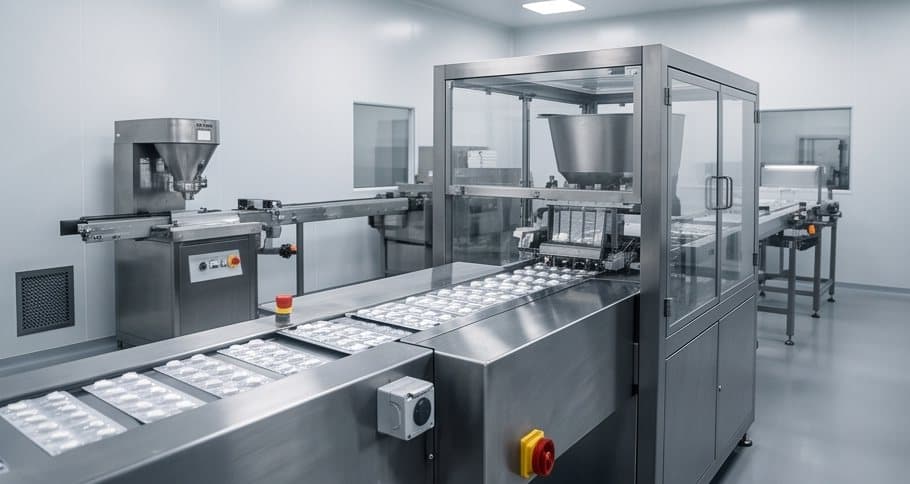
 Illustrative
Tablets · Powders · Filtration · Drying · Central Vacuum
Pompes à vide pour la pharmacie et le médical : sec et propre
Blister, transfert de poudres, séchage et conditionnement demandent un vide propre, sec et documentable. La série sèche YBDVP est construite pour cela.
In pharma the vacuum is part of the process record. Dry, oil-free pumps give a clean, validated central vacuum with nothing to contaminate a batch.
Yash Blowers · Engineering desk
FITLes familles Yash adaptées
Machines built for pharma & medical
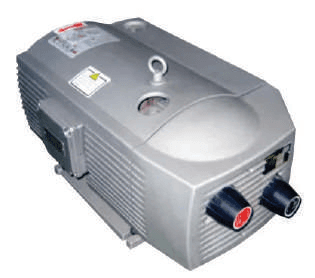
The default for pharma: oil-free dry vacuum for tablet and capsule de-dusting, powder and granule conveying, filtration and central vacuum — no oil in the chamber, so no carryover into product or cleanroom air.
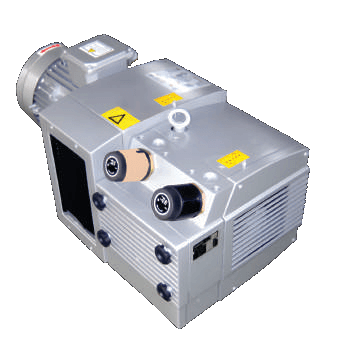
Oil-free dry pump that delivers both vacuum and pressure from one machine — useful where a station needs vacuum hold and a blow-off (tablet transfer, receiver discharge) without adding a second oiled unit.
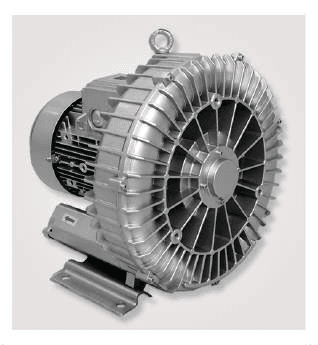
Oil-free low-vacuum / high-flow duty — central de-dusting headers and dust-extraction on presses and coaters where you need volume at modest vacuum, not deep vacuum.
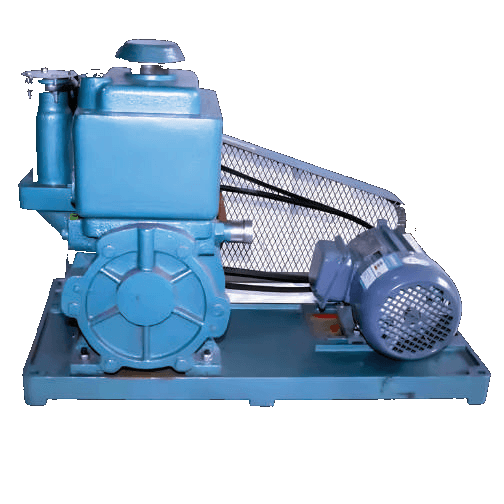
Deep oil-sealed rotary-vane for the duties that truly need it — freeze-drying (lyophilisation) support and R&D / lab benches down to the 10⁻³ mbar region. Keep it on the service side behind a cold trap and exhaust filter.
APPL'ingénierie
The problem: the vacuum source sits inside your contamination envelope
In pharmaceutical, medical-device and nutraceutical manufacturing, vacuum is not a background utility — it is in direct contact with product, excipient powders and cleanroom air. A tablet press de-duster pulls air straight off the tablet stream. A vacuum transfer line carries API and granule through the pump's upstream pipework. A tray dryer holds product under vacuum for hours. In every one of those duties the question that decides whether a machine belongs in a GMP area is the same: what does the pump put back into the air, and can any of it reach the product?
A conventional oil-sealed pump answers that question badly for most of these duties. It uses oil as its sealing and lubricating fluid, and a fraction of that oil leaves as vapour and fine mist through the exhaust — oil carryover. Vent that into a cleanroom, or let it back-migrate up an inlet line toward product, and you have introduced a hydrocarbon contaminant into a food or drug process. On top of that, oil-sealed pumps drag process dust and moisture into the oil, so the oil degrades, the pump's ultimate vacuum drifts, and you lose the one thing a validated process cannot lose: repeatability. The whole point of working to ISO 9001:2015 and GMP is that batch 500 behaves like batch 1. A pump whose performance wanders as its oil ages fights that directly.
The solution: dry, oil-free vacuum wherever air meets product or room
For the bulk of pharma duties the correct answer is a dry, oil-free vacuum pump — a machine with no oil in the pumping chamber, so there is no oil to carry over into product or exhaust. Nothing in the swept volume can contaminate the air stream, the exhaust is clean, and there is no oil to change, test or dispose of. That removes an entire contamination pathway and an entire maintenance variable in one decision. Combined with proper inlet filtration, a dry pump gives you the clean, repeatable vacuum a validated process is built on.
The duties that belong on dry, oil-free vacuum are the ones that live in the 1 bar-down-to-a-few-hundred-mbar working range and sit close to product or cleanroom air:
- Tablet and capsule handling and de-dusting. Vacuum lifts, orients and de-dusts tablets and capsules coming off the press, and pulls fines off the product before coating or inspection. Air is in direct contact with the dosage form — this must be oil-free.
- Vacuum transfer and conveying of powders and granules. Dense-phase and dilute-phase vacuum conveying move API, excipients and granules between charging, blending, milling and compression without open transfers and operator exposure. The conveyed material passes the pump's upstream side, so oil-free is mandatory and a good filter or receiver keeps powder out of the pump.
- Vacuum filtration and drying. Nutsche filters, filter dryers and tray / vacuum ovens hold product under vacuum to pull solvent and moisture at lower temperature — gentler on heat-sensitive API and nutraceutical actives. A dry pump handles the moderate vacuum these need without contaminating the batch.
- Central vacuum systems. One dry pump or pump bank feeds a ring main serving many bench points, de-dusters and cleaning stations across a block, sized to how many outlets actually run at once rather than to the total number installed.
- Degassing and vacuum hold. Deaerating liquids, syrups and suspensions, and holding a vessel under vacuum for leak and integrity checks.
Where a deep oil-sealed pump is the right tool — and only there
Not every pharma duty can run on a dry pump, and pretending otherwise gets you a machine that never reaches the pressure the process needs. When the process genuinely requires deep vacuum— below roughly 1 mbar, into the region where an oil-free machine of this class runs out of head — an oil-sealed rotary-vane pump is the right tool. The two clearest cases are freeze-drying (lyophilisation) support, where the chamber and condenser sit at a few hundred microns and the pump has to pull and hold a hard vacuum, and R&D and laboratory work — rotary evaporators, vacuum ovens, distillation and deep-vacuum benches — where the science needs pressures a dry pump of this range cannot reach.
A double-stage oil-sealed rotary-vane pump reaches into the 10⁻³ mbar region and holds it, which is exactly what these duties want. The trade you accept is oil: you keep it off the product by placing the pump on the service side of a condenser and cold trap, fitting an exhaust mist filter so oil does not reach room air, and maintaining the oil and gas-ballast on a schedule. The rule of thumb is simple — put the deep oil-sealed pump only where the pressure demands it, keep it off the product-contact side, and run everything else in the plant on dry, oil-free machines. Draw that line wrong in the “oil-sealed for everything” direction and you have put a contamination source where you did not need one.
Sizing a central vacuum system by simultaneous users
The most common sizing mistake on a pharma central vacuum system is adding up every installed outlet and sizing the pump for all of them running at once. They never do. A central system is sized on a diversity (simultaneity) factor— you count how many outlets are realistically open at the same time, not how many exist. Total the peak air demand of that simultaneous set, add each point's hose and fitting losses plus the ring-main pressure drop, set the working vacuum the worst-case point needs at its outlet, add a margin, and pick the pump — or the bank of pumps — that covers it. For a block with, say, 20 installed points where six run together at peak, you size for those six, not twenty.
For anything the plant cannot afford to lose, split the duty across two or more smaller dry pumps on a shared header with a non-return valve per unit rather than one large machine. That gives you N+1 redundancy — a failed pump does not stop the block — and it lets you throttle installed capacity to real demand and stage maintenance without a shutdown. Use the table below to map each duty to a vacuum level, pump type and Yash model, then send us the real outlet count, simultaneity and hose runs and we confirm the selection.
Why this is a validation and reliability decision, not just a purchase
Every choice above ties back to one theme: contamination control feeding repeatability. A dry, oil-free pump removes oil carryover into product and cleanroom air, delivers clean filtered air, and holds its performance batch after batch because there is no ageing oil to shift it — which is what makes it validation-friendly. Where deep vacuum forces an oil-sealed pump, you contain it: service side, cold trap, exhaust filter, scheduled oil. Yash machines are cast, machined and dynamically balanced in-house and built under an ISO 9001:2015 quality system, so the pump you qualify behaves the same at month 30 as at month 1, and spares ship fast enough that a down pump is a same-week fix rather than a held batch. Tell us the duty — the pressure, the flow, whether air touches product — and we will tell you honestly whether it wants a dry pump or an oil-sealed one, and which model fits.
SIZEAide au dimensionnement
| Duty | Working vacuum level | Pump type | Example Yash models |
|---|---|---|---|
| Tablet / capsule handling & de-dusting | ≈ 150 – 400 mbar (abs) | Dry, oil-free | YBDVP 25 · YBDVP 60 |
| Powder / granule vacuum conveying | ≈ 300 – 600 mbar (abs) | Dry, oil-free | YBDVP 60 · YBDVP 100 |
| Vacuum filtration & tray / vacuum drying | ≈ 20 – 150 mbar (abs) | Dry, oil-free | YBDVP 100 · YBVP 80 |
| Central vacuum (sized on simultaneous users) | ≈ 200 – 500 mbar (abs) | Dry, oil-free bank | YBDVP 60 · YBDVP 100 |
| Vacuum + blow-off at a station | vac + low-pressure | Dry vacuum/pressure | YBVP 40 · YBVP 80 |
| Freeze-drying support & lab / R&D deep vacuum | ≈ 0.5 mm/Hg → 10⁻³ mbar | Oil-sealed 2-stage vane | 2X-8A DSVP · 2X-15 DSVP |
Indicative only — final selection depends on your exact duty point, altitude and air temperature. Send the numbers and an engineer confirms the model.
FAQFrequently asked questions
When should I use a dry oil-free pump instead of an oil-sealed one in pharma?
Use a dry, oil-free pump for any duty where the air touches product or cleanroom — tablet and capsule handling, powder and granule conveying, filtration and drying, and central vacuum — because there is no oil in the chamber to carry over into product or exhaust. Reserve an oil-sealed rotary-vane pump for duties that genuinely need deep vacuum below about 1 mbar, mainly freeze-drying support and R&D benches, and keep it on the service side behind a cold trap and exhaust filter.
How do I size a pharmaceutical central vacuum system?
Size it on simultaneous users, not total installed outlets. Count how many points realistically run at once, total their peak air demand, add hose, fitting and ring-main losses, set the working vacuum the worst-case point needs at its outlet, add a margin, and pick a pump or pump bank that covers it. Splitting the duty across two or more smaller dry pumps on a shared header gives N+1 redundancy and lets you stage maintenance without stopping the block.
Is oil carryover really a contamination risk, or just a maintenance issue?
Both, but the contamination risk is the reason it matters in GMP areas. An oil-sealed pump exhausts a fraction of its oil as vapour and mist, which can reach cleanroom air, and oil can back-migrate up an inlet line toward product. A dry, oil-free pump removes that pathway entirely. It also removes the oil-ageing that makes an oil-sealed pump's ultimate vacuum drift, which is why dry pumps hold their performance batch after batch — the repeatability a validated process needs.
Are Yash pumps suitable for a validated, ISO 9001:2015 process?
Yes. Yash pumps are cast, machined and dynamically balanced in-house and built under an ISO 9001:2015 quality system, so a qualified pump holds the same performance over its life rather than drifting as an oiled machine would. Test certificates are available on request, and dry oil-free machines are the natural fit for validation because they add no oil carryover and no oil-change variable to the process.
RFQ / Request for Quotation
Dimensionner un surpresseur pour pharmacie et médical ?
Send duty point, flow and pressure — an engineer sizes the right model and quotes ex-works Faridabad, FOB Nhava Sheva or CIF your port.