
50 Hz · FOB Nhava Sheva / Mundra · CIF SE Asian ports
Industrial blowers exported to South & Southeast Asia
For buyers across Bangladesh, Vietnam, Indonesia, Thailand, Malaysia, Sri Lanka and the Philippines: 50 Hz regenerative and centrifugal blowers, priced for high-volume sourcing and shipped on short transit times from Indian ports to your dock.
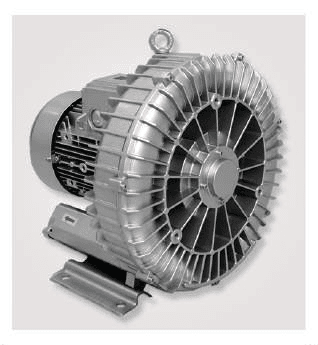
Short sea routes, matching 50 Hz grids and spares held in stock — for South and Southeast Asia, sourcing from India means a machine on site in weeks, not months.
Yash Blowers · Mesa de exportación
KITLo que se envía a Asia
Tres familias que cruzan más el agua
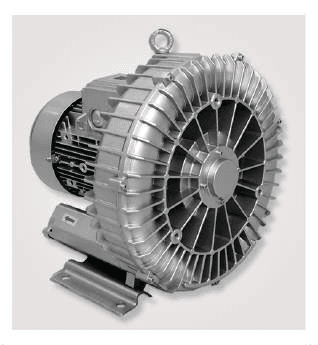 Single Stage Turbine Blower
El caballo de batalla regenerativo — aireación sin aceite y aire de vacío para PTAR, acuicultura y servicio de proceso. Nuestra línea de exportación de mayor volumen.
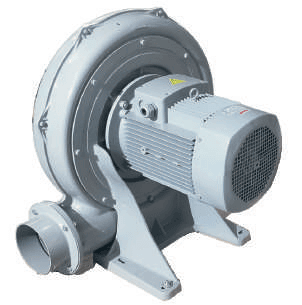 CX-Series Centrifugal Blower
Aire centrífugo de alto caudal y baja presión para tratamiento de agua, textil y secado — silencioso y eficiente en servicio continuo.
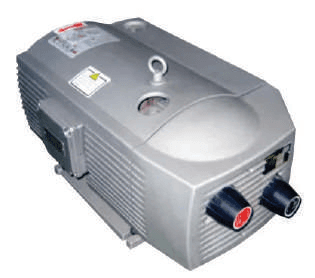 Dry Vacuum Pump (Only Vacuum Series)
Vacío seco limpio y sin aceite para envasado, impresión y líneas farmacéuticas donde la contaminación no es una opción.
EXPAbastecimiento para Asia
Why South & Southeast Asian buyers source blowers from India
South and Southeast Asia is one of the densest concentrations of blower demand anywhere in the world, and the reasons are structural rather than seasonal. The region carries an enormous textile spinning and weaving base — Bangladesh and Vietnam alone run tens of thousands of ring frames, air-jet looms and humidification plants that depend on low-pressure air. It hosts a shrimp and fish aquaculture industry that feeds global export markets, with Vietnam, Indonesia and Thailand farming intensively enough that pond aeration is a production input, not an accessory. It processes plastics and PET at scale for domestic consumption and re-export. And it prints and packages a rising share of the consumer goods that the region both makes and buys. Every one of those sectors runs on regenerative or centrifugal blowers, and most of the machines in service were bought on landed cost and lead time rather than brand loyalty.
That is precisely where Indian sourcing wins for this market. For a price-sensitive, high-volume buyer in Dhaka, Ho Chi Minh City or Surabaya, the value case is concrete: Indian manufacturing lands a blower that meets the same duty point as a European or Japanese unit at a materially lower cost, and it does so from ports that sit a short sail away. Yash Blowers builds to that reality — 123 models, cast and dynamically balanced in-house under an ISO 9001:2015 quality system, with impellers, filters and pressure-relief valves made under the same roof so spares are an actual supply chain rather than a line in a brochure.
Short shipping is the quiet advantage
The detail that separates Indian supply from Chinese, European or Japanese supply into this region is transit time and freight. A container from Nhava Sheva (JNPT) or Mundra to Chittagong, Colombo, Port Klang or Ho Chi Minh crosses a short stretch of the Indian Ocean and the Bay of Bengal, not an ocean. For eastern Indian buyers we also ship from Chennai and Kolkata, which sit even closer to Chittagong and Colombo. That geography turns into lower sea freight per unit, fewer transhipment legs, and lead times measured in a handful of weeks rather than a quarter. When a spinning mill or a shrimp farm has a blower down, that difference decides whether the replacement arrives before the loss compounds — and for critical spares we move small parcels by air freight so a diffuser bank or a pond bank is not held hostage to the next sailing.
50 Hz grid, but voltage varies by country — state your destination
The whole region runs on a 50 Hz grid, which matches Indian manufacturing directly and removes the motor-rewind problem that complicates exports to the Americas. What does vary is voltage. Three-phase supply across South and Southeast Asia sits in the 380–415 Vband, but the exact figure differs by country and sometimes by utility — a Vietnamese plant may be on 380 V while a Malaysian or Bangladeshi site is on 415 V. Single-phase supply for smaller fractional units sits at 220–230 V. Because of that spread, the one thing we cannot assume is the destination. Tell us the country and the measured site voltage and phase, and the motor is wound and terminated to hit the rated duty point on your supply. A machine built for the wrong voltage runs hot, trips or under-delivers air, so this is the single specification we confirm before anything ships.
Target sectors: textiles, plastics & PET, aquaculture, printing & packaging
Four sectors define the demand and each maps to a specific machine and duty. Textileslead by volume — the Bangladesh and Vietnam spinning and weaving base uses regenerative blowers for air-jet weft insertion, pneumatic yarn cleaning, humidification and dust extraction, all continuous-running low-pressure work that our machines are balanced for. Plastics and PETprocessing draws on blowers for material conveying, drying-hopper air, blow-moulding assist and vacuum handling across the region's converters and bottle plants. Aquaculture is the fastest-moving segment: Southeast Asian shrimp ponds and recirculating aquaculture systems (RAS) hold dissolved oxygen with diffused-air aeration, and a regenerative blower is the efficient way to push that air across a bank of diffusers for the twenty-four hours a day an intensive pond runs. Printing and packaging rounds out the base, using vacuum for sheet-feeding, pick-and-place, laminating and pouch handling on the machinery the region builds and operates.
Textiles — Bangladesh and Vietnam
A weaving shed running air-jet looms needs stable, clean low-pressure air at each loom and reliable extraction to keep fly and lint off the yarn. These are duties where a machine that holds its rated flow for years without drama matters more than a spec sheet, and where a mill buying by the dozen wants a unit priced for that quantity. Yash regenerative blowers in the 200–500 mbar range cover the common textile duties, and because the impellers and filters are made in-house, a mill can stock the two or three wear parts that actually fail and keep looms running.
Aquaculture — Southeast Asian shrimp and RAS
Intensive shrimp culture lives or dies on dissolved oxygen, and a farm that stocks at high density cannot afford aeration that falters. Diffused air from a regenerative blower, pushed through a bank of fine-bubble diffusers, is the way serious operators hold oxygen through the night and through the critical late-growout weeks. For RAS fish production the same logic applies with even tighter tolerance. These buyers value blowers that run continuously without overheating and that can be serviced locally from held spares — both of which are built into how we supply the region.
Shipping, Incoterms and documents
Yash ships from Nhava Sheva (JNPT) and Mundra on the west coast, with Chennai and Kolkata available for buyers who sit closer to the Bay of Bengal. Common destination ports are Chittagong (Bangladesh), Ho Chi Minh / Cai Mep (Vietnam), Jakarta / Tanjung Priok (Indonesia), Bangkok / Laem Chabang (Thailand), Port Klang (Malaysia) and Colombo (Sri Lanka). Most buyers work on FOB at the Indian port or CIF to their destination; EXW Faridabad is available if you run your own freight forwarder. Units are palletised and packed in seaworthy, ISPM-15 heat-treated wooden crates so they clear phytosanitary rules without hold-ups, and they are declared under HS heading 8414. Orders consolidate into 20ft or 40ft containers to maximise fill, while smaller quantities and urgent spares move by air freight. Commercial invoice, packing list, certificate of origin and per-unit test certificates travel with the shipment on request.
Getting to a firm quote
To turn an enquiry into a firm, comparable quote we need five things: the duty point (flow and pressure, or the vacuum level), the destination country and measured site voltage and phase, the quantity, the destination port, and your preferred Incoterms — EXW, FOB or CIF — along with the duty point in your commercial terms so there is no ambiguity about where our responsibility ends and yours begins. With that we confirm the 50 Hz model wound to your country's voltage, the FOB or CIF price, the lead time and the container loading plan. First orders into a new market are often a mixed container of several models — textile, aquaculture and PET duties together — so a distributor can seed inventory across the range and hold the wear parts that keep customers running.
V/HzVoltaje y frecuencia
| Parameter | Asia specification | Note |
|---|---|---|
| Frequency | 50 Hz | Standard across South & Southeast Asia — matches Indian builds |
| Three-phase voltage | 380–415 V | Band varies by country; specify measured site voltage |
| Single-phase voltage | 220–230 V | Available on smaller fractional-HP units |
| Destination | State the country | Voltage varies by country — name the destination country before we build |
MKTIndustrias objetivo en Asia
Textiles
Air-jet weaving, yarn cleaning, humidification and dust extraction across the Bangladesh and Vietnam spinning and weaving base.
Plastics & PET
Material conveying, drying-hopper air, blow-moulding assist and vacuum handling at converters and bottle plants.
Aquaculture
Diffused-air aeration for Southeast Asian shrimp ponds and RAS fish systems — 24/7 dissolved-oxygen duty.
Printing & packaging
Vacuum for sheet-feeding, pick-and-place, laminating and pouch handling on regional machinery.
DOCPreparación para exportación
- Código HS
- 8414 — air/gas compressors, blowers & fans (8414.59 / 8414.80)
- Incoterms
- EXW Faridabad · FOB Nhava Sheva / Mundra · CIF your port
- Embalaje de exportación
- Seaworthy wooden crates, ISPM-15 heat-treated, on pallets
- Documentación
- Commercial invoice, packing list, certificate of origin; test certificates & CE-readiness on request
- Puertos
- Sea from Nhava Sheva (JNPT) & Mundra; air freight for spares
- Cargas de contenedor
- Mixed 20ft / 40ft — units palletised and crated to maximise fill
RFQ / Solicitud de cotización
Consultas de Asia
Envíe su requerimiento, el puerto de destino y los Incoterms objetivo. Cotizamos FOB o CIF y confirmamos el plazo de entrega y la carga de contenedor.