
50 Hz · 380–415 V · genset-ready · CIF Mombasa / Dar es Salaam / Durban / Lagos / Tema
Industrial blowers exported across Africa
For African importers, contractors and end users: 50 Hz regenerative and centrifugal blowers built for unstable grid power, dust and heat, backed by an in-house spares pipeline that keeps remote sites running.
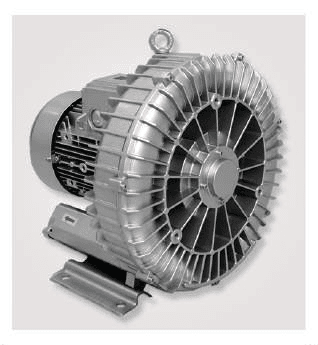
Where the grid wanders and the genset carries the load, robust wins. Simple, serviceable machines with spares that actually arrive by air freight.
Yash Blowers · Mesa de exportación
KITLo que se envía a Africa
Tres familias que cruzan más el agua
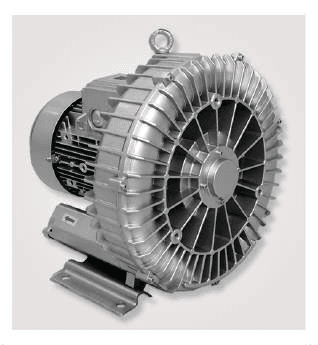 Single Stage Turbine Blower
El caballo de batalla regenerativo — aireación sin aceite y aire de vacío para PTAR, acuicultura y servicio de proceso. Nuestra línea de exportación de mayor volumen.
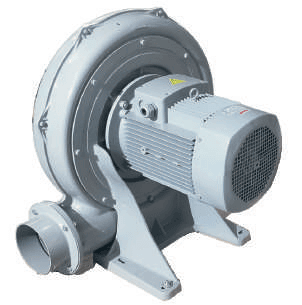 CX-Series Centrifugal Blower
Aire centrífugo de alto caudal y baja presión para tratamiento de agua, textil y secado — silencioso y eficiente en servicio continuo.
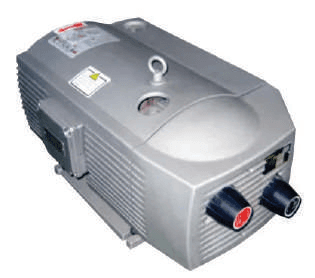 Dry Vacuum Pump (Only Vacuum Series)
Vacío seco limpio y sin aceite para envasado, impresión y líneas farmacéuticas donde la contaminación no es una opción.
EXPAbastecimiento para Africa
What is driving blower demand across Africa
African demand for industrial blowers is growing along a handful of clear lines, and each one maps to a machine Yash already builds. The fastest mover is aquaculture. Tilapia and catfish farming across Nigeria, Ghana, Uganda, Kenya, Egypt and Zambia has shifted from extensive ponds toward intensive and semi-intensive systems, and shrimp farming is expanding on the coasts of Madagascar, Mozambique and West Africa. Intensive stocking only works if you can hold dissolved oxygen, and the efficient way to do that is diffused-air aeration driven by a regenerative blower feeding fine-bubble diffusers on the pond or tank floor. A single 4 kW ring blower can aerate a large earthen pond or a bank of raceways, and it runs for years with one moving part.
The second driver is mining and cement. Africa's mineral belts — the copper of Zambia and the DRC, the gold of Ghana and Tanzania, the platinum and coal of South Africa, and cement plants from Nigeria to Ethiopia — generate large volumes of fine dust at crushers, transfer points, screens and bagging lines. Dust collection with a pulse-jet baghouse or cartridge filter needs a reliable pressure or vacuum source to keep the extraction and the reverse-pulse cleaning working. That duty is unglamorous and continuous, which is exactly where a simple, well-balanced blower earns its keep. Third is municipal and industrial wastewater, expanding as cities grow and effluent rules tighten — treatment plants run blowers continuously for aeration-basin and diffuser duty. Fourth is agriculture and food processing: grain aeration, pneumatic conveying of flour and feed, drying, and vacuum handling in packing lines.
Why buyers across Africa source blowers from India
Most African projects are price-sensitive, and Indian manufacturing gives the strongest cost-performance for the job. A Yash regenerative blower does the same 200–500 mbar aeration, conveying or dust-extraction duty as a premium European brand and lands at a materially lower cost, which matters when a fish farm or a cement bagging line is watching every line of the capital budget. The machines are cast and dynamically balanced in-house under an ISO 9001:2015 quality system, so the unit that arrives performs to its datasheet rather than to a generous-looking brochure.
The second reason is the nature of the machine. A regenerative blower has a single moving part— the impeller on the motor shaft. There are no gears, no lobes to time, no oil to change, no vanes to wear. For a site three hours from the nearest town, that simplicity is the difference between a machine a local electrician can keep alive and a machine that becomes a paperweight the first time it faults. Yash builds123 models across the regenerative and centrifugal range, so the same supplier covers the pond, the baghouse, the aeration basin and the conveying line.
The third reason is the one that quietly decides most African tenders: spares. Impellers, filter cartridges, pressure-relief valves, seals and bearings are made under the same roof as the blowers, so spares are a real supply chain rather than a promise on a datasheet. When a line is down and a farm is losing stock by the hour, Yash air-freights the part rather than leaving a customer waiting six weeks for a container. Ask any operator who has run imported equipment in a remote African site: parts availability, not headline price, is what separates a machine that pays back from one that sits idle in a shed.
Engineering for African site realities
Three field realities shape how a blower should be specified for Africa, and each one is answered at the build stage rather than left to the customer to discover.
Unstable grid power and genset operation
Many African sites run on gensets for part or all of the day, and even grid-connected sites see voltage that sags and swings. A blower motor that is fussy about supply will trip, overheat or burn out. Yash winds motors for 50 Hz at 380–415 V three-phase with a tolerance band that copes with the voltage drift a generator produces under changing load, and smaller units are available at 230 V single phase for farms and workshops without three-phase supply. Tell us whether the site runs on grid, genset or both, and the motor and starter are matched so the machine holds its rated duty point instead of hunting for it.
Dust and heat
Ambient temperatures of 35–45 °C and dust-laden air are the norm across much of the continent. Two things follow. First, inlet filtrationhas to be specified properly — a blower breathing fine mine or cement dust without adequate filtration will abrade its impeller and shorten its life, so the machine ships with a filter sized for the environment and with spare elements. Second, motor de-rating: a motor rated for a temperate climate loses margin in 45 °C ambient, so Yash selects the frame with thermal headroom and adds thermal protection rather than running the motor at the edge of its class. The result is a machine that survives the environment instead of merely surviving the test bench.
Spares logistics as the deciding factor
Because a down blower on a remote site cannot simply be swapped from a local distributor's shelf, the reliability of the machine and the speed of the parts pipeline outweigh almost everything else. This is why Yash pushes a simple, single-moving-part design and keeps parts in stock for air freight: the honest engineering answer for Africa is to reduce the number of things that can fail and to shorten the time to fix the one that does.
Power supply: 50 Hz across the continent
Africa runs on 50 Hz, the same frequency as India, which removes the re-winding problem that complicates exports to the Americas. Standard three-phase supply is 380–415 V and single-phase is 230 V, so a machine built to Indian domestic specification drops onto an African supply with only the voltage band and genset tolerance to confirm. Give us the site voltage, the phase and whether the load is on a generator, and the motor and starter are set accordingly before the crate leaves the works.
Shipping, Incoterms and lead time
Yash ships from Nhava Sheva (JNPT) and Mundra to the main African gateways — Mombasa for Kenya and the East African interior, Dar es Salaam for Tanzania, Zambia and the DRC, Durban for Southern Africa, Lagos (Apapa and Tin Can) for Nigeria and Tema for Ghana and the West African corridor. Most buyers work on CIF to their destination port or FOB at the Indian port; EXW Faridabad is available if you consolidate your own freight. Units are palletised and packed in seaworthy, ISPM-15 heat-treated wooden crates that clear phytosanitary rules, and everything is declared under HS heading 8414. Orders consolidate into 20ft or 40ft containers to maximise fill; critical spares and small quantities move by air freight when a line is down. Certificate of origin and per-unit test certificates travel with the shipment on request.
Getting to a firm quote
Send the duty point — flow in m³/h and pressure or vacuum in mbar — the site voltage and phase, whether the load runs on a generator, the quantity, and your destination port with preferred Incoterms. We confirm the 50 Hz model, the inlet filtration and any de-rating for ambient temperature, the FOB or CIF price, the lead time and the container loading. First orders into a new market are often a mixed container that seeds a distributor's inventory across the aquaculture, dust-collection and wastewater ranges, with a starter set of spares packed alongside so the first breakdown is a same-week fix rather than a six-week wait.
V/HzVoltaje y frecuencia
| Parameter | Africa specification | Note |
|---|---|---|
| Frequency | 50 Hz | Standard across Africa — same as India, no motor re-wind needed |
| Three-phase voltage | 380 – 415 V | Standard industrial supply; specify site voltage |
| Single-phase voltage | 230 V | For farms and workshops on smaller fractional-kW units |
| Generator (genset) operation | Wide voltage-stability tolerance | Many sites run on gensets — motors wound to cope with voltage drift under changing load |
MKTIndustrias objetivo en Africa
Aquaculture
Diffused-air aeration for intensive tilapia, catfish and shrimp systems — holds dissolved oxygen in ponds, tanks and raceways across a fast-growing sector.
Mining & cement dust collection
Pressure and vacuum for pulse-jet baghouses and cartridge filters at crushers, transfer points, screens and bagging lines.
Municipal wastewater
Continuous aeration-basin and diffuser duty at treatment plants as cities grow and effluent rules tighten — 24/7 rated machines.
Agriculture & food processing
Grain aeration, drying, and pneumatic conveying of flour, feed and granules in processing and packing lines.
DOCPreparación para exportación
- Código HS
- 8414 — air/gas compressors, blowers & fans (8414.59 / 8414.80)
- Incoterms
- EXW Faridabad · FOB Nhava Sheva / Mundra · CIF your port
- Embalaje de exportación
- Seaworthy wooden crates, ISPM-15 heat-treated, on pallets
- Documentación
- Commercial invoice, packing list, certificate of origin; test certificates & CE-readiness on request
- Puertos
- Sea from Nhava Sheva (JNPT) & Mundra; air freight for spares
- Cargas de contenedor
- Mixed 20ft / 40ft — units palletised and crated to maximise fill
RFQ / Solicitud de cotización
Consultas de Africa
Envíe su requerimiento, el puerto de destino y los Incoterms objetivo. Cotizamos FOB o CIF y confirmamos el plazo de entrega y la carga de contenedor.