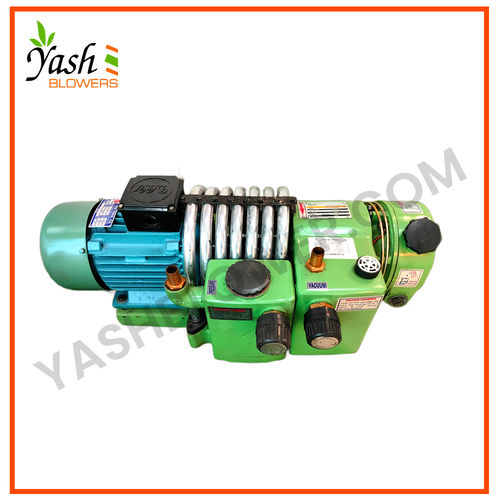
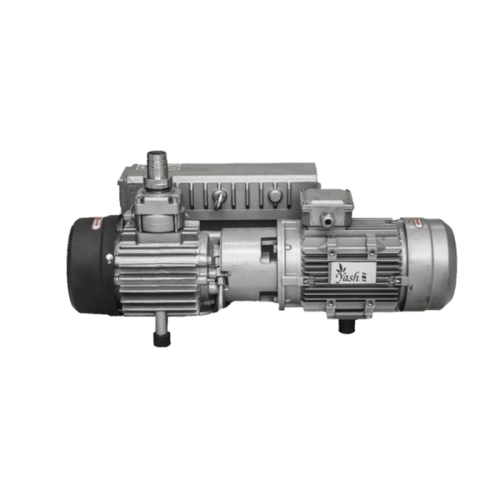
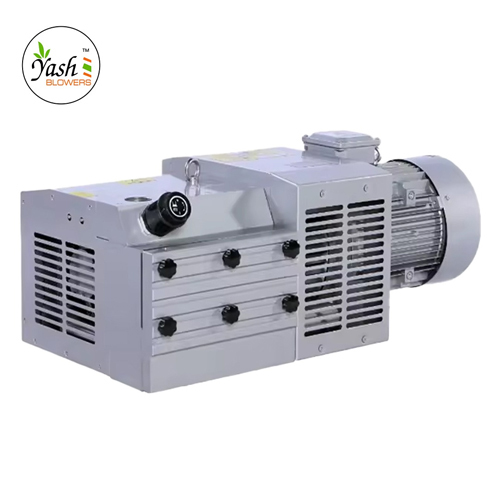
About Vacuum Pump
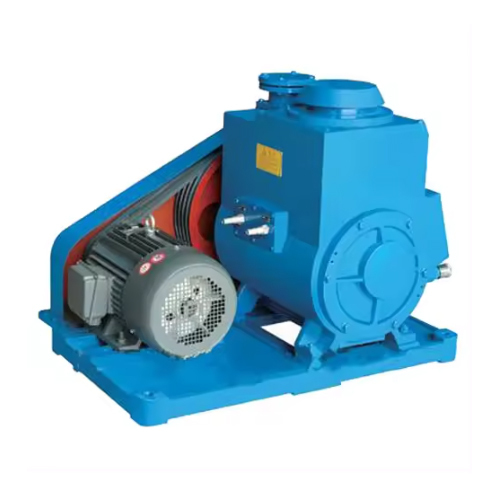
Vacuum Pump is offered with a special mechanism under which the removal of air as well as other any gas particles from the instrumentality takes place. This action results in making a vacuum in the vessel. The electronics manufacturing units employ this pump for the production of electric bulbs & lamps, glass coating, CRT tubes, semi-conducting materials, etc. Vacuum Pump runs into the need of various industrial applications. It can create both low as well as high vacuum as per the requirement of application. It has utility in many industries and with the integration of some other machines, it ensures usages in radio therapy, surgery equipments, electron microscopy, pharmaceutical processes, etc.
Vacuum Pump Features:
1) Useful fin the process of research and development instruments.
2) Provides safe, economical and noise-free operation.
3) Rust-resistant construction allows for high durability.
4) Vacuum pump is so simple in use and fixture.
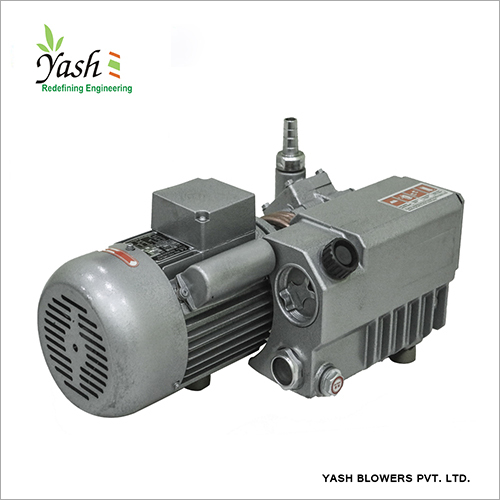
Efficient Design for Versatile UsageThis rotary vane vacuum pump offers a compact, lightweight structure tailored for seamless integration into laboratory, industrial, and medical environments. Its self-priming, oil-sealed system provides a maximum suction of 0.1 mbar, making it suitable for critical applications like vacuum packaging and freeze drying. Portability is enhanced by an ergonomic handle and base-mounted setup, allowing easy relocation and installation depending on your project needs.
Reliability and Safety at Its CoreEquipped with thermal overload motor protection and insulation class F, this pump ensures operational safety and longevity. The integrated vacuum gauge allows precise pressure monitoring, while the air cooling system maintains optimal operating temperature (5C-40C). Its manual control system guarantees straightforward use and consistent results, conforming to ISI Marked and CE Certification standards for added peace of mind.
FAQ's of Vacuum Pump:
Q: How do I operate and maintain the vacuum pump for long-term use?
A: To operate the vacuum pump, ensure it is placed on a stable base and connected to the appropriate voltage (220V/380V). Fill with the specified amount of oil (350 ml) before starting. Maintenance includes regularly checking oil levels, inspecting the seals, and cleaning the integrated vacuum gauge. The air-cooled design minimizes upkeep, but it's advisable to schedule periodic inspections for optimal performance.
Q: What types of applications can this rotary vane vacuum pump be used for?
A: This vacuum pump is suitable for various laboratory, industrial, and medical applications, including vacuum packaging, freeze drying, evacuation, and filtration. Its flexibility and customizable head size make it ideal for both general and specialized tasks where precise vacuum conditions are required.
Q: When should I check or replace the oil in the vacuum pump?
A: It's recommended to check the oil level and quality before each use, especially if the pump is used continuously or in demanding environments. Replace the oil when it appears discolored, contaminated, or after a defined period as specified in the maintenance guidelines to ensure proper sealing and lubrication.
Q: Where can this vacuum pump be installed and used safely?
A: The pump should be installed on a flat, stable surface in environments where the temperature ranges between 5C and 40C. Its compact and portable design makes it suitable for bench-top or floor mounting in laboratories, production lines, or clinical settings, provided there's adequate ventilation for air cooling.
Q: What is the process for connecting the inlet and outlet ports?
A: The vacuum pump features threaded inlet and outlet ports that can be connected to your system using standard or optional fittings, depending on your operational model. It's important to ensure all connections are secure and leak-free to achieve the ultimate pressure of up to 0.1 mbar.
Q: How does this vacuum pump benefit my operations compared to alternatives?
A: This pump combines energy efficiency (0.55 kW, electric), compactness, low maintenance, and quiet operation (<60 dB(A)), while also offering continuous performance and safety through features like motor thermal overload protection. These attributes lower operating costs, reduce downtime, and enhance user safety.


 Send Inquiry


 Send Inquiry
 : +919971006400




 Send Inquiry
 Send SMS


 English
 Spanish
 French
 German
 Italian
 Chinese (Simplified)
 Japanese
 Korean
 Arabic
 Portuguese